TERRY GROSS, HOST:
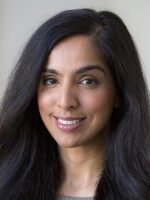
This is FRESH AIR. I'm Terry Gross. Our guest today is the Syrian photojournalist Loubna Mrie. She first joined the Syrian Revolution as an act of rebellion against her father. Before we meet her, it's my pleasure to introduce our guest interviewer, Aarti Shahani. She's a former NPR tech reporter. You may have also heard her interviews on her podcast, "Art Of Power," or read her migrant memoir, which is about fighting ICE to protect her father. It's called "Here We Are." Now that I've introduced Aarti, here she is with Loubna Mrie.
AARTI SHAHANI: Fifteen years ago, the country Syria joined the Arab Spring. Loubna Mrie became part of this movement - first as a casual protester and, over time, as a photo journalist who documented the attacks and killings that the government claimed never happened. She was unlike the majority of protesters in a key way. She is Alawite, the religious minority that ruled the country. Loubna didn't consider herself political at first, but she did deeply resent her father. He came from a poor Alawite family and made his money by allegedly being an assassin for the father of Bashar al-Assad. When daughter defied father, he punished her for it horrifically. The Syrian civil war lasted far longer than Loubna Mrie ever expected. The estimated death toll is more than 650,000. Another 100,000 people have been forcibly disappeared, and more than 13 million Syrians remain displaced. Syria had 22 million people at the start of the civil war, so that's more than half of the population.
Loubna Mrie's new book is called "Defiance: A Memoir Of Awakening, Rebellion, And Survival In Syria." Two parts in particular really got under my skin. First, the toxic family dynamics that honestly feel wincingly familiar to me and probably to many of you listening, and then the less familiar part - she documents how her country fell apart. That's something a lot of us feel increasing anxiety around. Loubna Mrie, welcome to FRESH AIR.
LOUBNA MRIE: Thank you.
SHAHANI: Both of your parents are Alawite...
MRIE: Yes.
SHAHANI: ...A minority in Syria, a bit more than 10% of the population and the same religion as the ruler at the time, Hafez al-Assad. And your mom's mom does not approve of your parents' marriage, even though they're both Alawite. Tell us about how your parents met and why grandma didn't like it.
MRIE: So my parents met at the funeral of my grandfather - my mother's father - who was a big figure in her life. My grandfather was - he was a consulate in Turkey, in Brazil, in Germany, and he loved my mother so much, and he always told her that her future depends on education. It does not depend on marriage. And he truly wanted my mother to seek education, like all her siblings.
And my mother was very - she loved her father so much, and my father was the opposite of my grandfather. My father comes from a family that did not have the privilege to go to school, to go to college, and they were involved in some dirty business for the Syrian government. And my grandfather was aware of that, so my grandmother was also aware of that. And my grandmother was very clear with my mom that if this marriage goes south, you will be bearing the consequences on your own.
SHAHANI: And did your mom ever tell you about why she fell for your dad? Did she say it in her own words?
MRIE: Throughout my childhood, my father was very, very, very abusive. But there was always this side of him that was very charming and very loving that my mother really wanted us to see. And I think that's why my mother was really keen on keeping my father into our lives, me and my sister, despite all the abuse that he was showing her and us. Can I speak about the memoir a little bit? Or...
SHAHANI: Of course, yeah. I thought we were doing that, but tell me what you want to say (laughter).
MRIE: OK, OK. No, no, no, I...
SHAHANI: Yes.
MRIE: Because, like, trying to figure out those sides of my father and trying to remember my childhood without being tinted with so much pain and grief was one of the most difficult aspects of writing this book. Because memoirs, like, especially memoirs that are filled with pain and grief - they are very difficult to write because you really need to write about people with love and nuance and write with love, even about the people that you hate and despise the most. And pain tempts us. Pain and anger tempts us to see things in absolutes, to flatten people into heroes and villains. And when you do that, you risk leaving parts of the truth out, and this is not fair for them, and it's not fair for the reader.
I loved how I was being treated when someone asked me about my full name, and I mentioned my father. It was all painful and kind of shameful to admit that, especially after all what my father did later on in my life. But although as a daughter, I despised him, as an author and as someone writing this memoir, it felt like I had a responsibility towards him to show all sides of him, even the sides that I don't want to remember anymore.
SHAHANI: When you were born, your dad told your mom, I want to name this baby after my mistress.
MRIE: Yeah. So my father had lots of mistresses before my birth and during my mother's pregnancy and even after. And in that time, in that society, it was very normalized for a guy to have mistresses, because as the say was, nothing disgraces a man - nothing disgraces a man, except his pocket. So as long as the guy was taking care of his family financially, he can do whatever he wants. And that was not exceptional to my family. This was kind of the broad understanding of the gender dynamics. And if a guy ends up in an affair, it's always on the female.
SHAHANI: Tell me, Loubna, when you were a small child, your first home is your grandmother's home in Damascus.
MRIE: Yeah.
SHAHANI: Your mom and your older sister, Alia, and you live with grandma. But grandma - she wasn't spoiling you, you know, kind of as we expect grandmas to do.
MRIE: No, my - so when my grandmother told my mother, if this marriage does not work out, you are going to bear the consequences alone - when my father eventually left the country, and my mother took us to live in grandmother's house in Damascus, even though I was very young, I was able to sense that we were not welcomed in the house. And my mother did everything to broaden our, like, world outside of the house. She would take us out every day, and eventually, my grandmother wanted us to leave the house.
And I remember at some point, my mother was, like, sobbing on the phone with my father asking him for help. And he offered to help on one condition that we move from Damascus to a small coastal town called Jableh where he would offer us a house, where he would also, like, support us financially on the condition that we will be raised near his big family in Jableh. And...
SHAHANI: So not living with him, but living amongst his family.
MRIE: Not living with him, but, like, living near his sisters and brothers. And looking back, I truly wish my grandmother acted differently because my whole - the whole trajectory of my life would have been different. My mother had to choose our freedom over hers. She was willing to uproot herself completely from everything she knew to move to a city that she doesn't know anyone in. Like, she was not even close with my father's family in order for me and my sister to have, like, a stable life. She wanted us to have a home.
GROSS: We're listening to guest interviewer Aarti Shahani's conversation with photojournalist and war survivor Loubna Mrie. Her new book is called "Defiance: A Memoir Of Awakening, Rebellion And Survival In Syria." We'll be right back. This is FRESH AIR.
(SOUNDBITE OF MUSIC)
GROSS: This is FRESH AIR. Let's get back to our interview with activist and photojournalist Loubna Mrie about her new book, "Defiance: A Memoir Of Awakening, Rebellion And Survival In Syria." In it, she recounts her childhood in Syria, why she joined the 2011 Arab Spring protests and how her father made her pay for standing up against the regime he was part of in Syria. She spoke with guest interviewer Aarti Shahani. And a note to listeners - in this part of the interview, there's a brief discussion of child sexual abuse. Here's Aarti.
SHAHANI: So you moved from Damascus to Jableh basically because you cannot stay in your grandmother's home and your mom's at her wit's end. Jableh is a coastal town, and it's - in some ways, it sounds really beautiful. You use one of my favorite words throughout your memoir - corniche.
MRIE: (Laughter).
SHAHANI: And I have to say, I love the word corniche because my father - he was actually a child refugee who landed in Beirut long ago, and he would tell me about his walks along the corniche. So when you say it, I think of Dad.
MRIE: Cool.
SHAHANI: It's the scene on the beach, right?
MRIE: It's...
SHAHANI: It's where people are courting each other, looking fabulous.
MRIE: I mean, Jableh is a very, like, small city, but it felt, like, bigger than life itself. Like, it was so vibrant. It was full of life. The air was, like - because we moved to Jableh in the summer, and I remember how the air smelled of the sea and how our balcony would have kind of, like, this dew in the morning. And sometimes I would just, like, wipe my fingers on the windowsill, and I sometimes - I know, it's gross - but I would taste it, and it would be so salty.
SHAHANI: (Laughter).
MRIE: And it was very different than Damascus. Like, in Jableh, there is this, like, cart sellers everywhere. And the houses were so close to each other, and you would see neighbors, like, inviting each over for coffee, you know, by just, like, shouting to each other from the balconies across the street. And it was so beautiful. Like, I remember how much I loved the sea. But then, as I got older, I started to realize this is also where women walk, and this is where women meet their, like, future husbands because you go, you walk on the corniche, you're dressed as best as possible, your hair reeking of hair spray because the humidity is insane. And you're just walking...
SHAHANI: (Laughter).
MRIE: ...Back and forth, and then all these beautiful cars.
SHAHANI: And you had money there as well. Is that right? You come to realize that your family is quite wealthy.
MRIE: Oh, yeah. I loved that. Especially when I first started school, you know, when I was being kind of put, like, towards the end. But then the teacher asked me, what's your full name? And I told her Loubna Mrie, and then she asked me, are you related to my father? And when she knew I was Jawdat's daughter, she put me in the front seat. And there was all these, like, signs and hints that my family was special - that I had this power by having this last name.
SHAHANI: How did you find yourself using that power as a child?
MRIE: You know, that was - this is when my mother started to kind of push back against this because she truly did not want me and my sister to use this power like my cousins were doing. And she always told us that, your power comes from your education and having a future for yourself. It will never come just from your last name or from your dad's money and your dad's inheritance. And that was the main conflict, often, between my mom and dad.
SHAHANI: That message is very powerful for you. And you seem, as a child, continuously torn between your mom saying, get your education, and your dad's sort of waving his money in your face and saying, follow my lead. Describe that dance because you spent quite a bit of time also trying to curry favor with your father.
MRIE: So the thing is that I was really bad in school. So in ninth grade, I had very bad scores, and my mom was horrified with me because the year before, my sister's score was one of the top three scores in the country. And my mother was so happy with my sister's score because, you know, like, throughout our childhood, people kept telling her, like, girls need their father in their lives in order to succeed. So by my sister's achievement, my mother showed everyone and proved to everyone that she was enough. Like, she was more than enough. So my sister's scores were her source of pride. So the year after that, when my scores were super low, my scores were her source of shame. And my mother was so angry with me.
And in that moment, I knew I can just turn to my father. And my father, when he knew about my score, he took me out, out for lunch, and he got me a piece of gold. And he told me, like, not to worry about my grades. And he reminded me again that, you know, school is for poor people who will need to apply for jobs after college, but I wouldn't need that because I have his money, his worth, his inheritance, and I would have a rich husband. And then I told him, like, but my mother says the opposite. And he told me, like, but look at your mother. She would die of hunger without me.
And I - for some reason, I repeat that line to my mother, and she was so furious, she calls him and she tells him that he's illiterate and he's trying to destroy everything she's trying to instill in us. And two weeks later, we try to get money from him and he demands my mother to be on the phone and to apologize from (ph) him. And I remember seeing her on the phone whispering, may God bless your hands. I'm so sorry for what I said. And that gave me a hint that I needed him. I needed my father's approval. I needed his money if I wanted to have a good future.
SHAHANI: Loubna, you write very frankly on this relationship with your dad where you're, as a child, learning to play the game. You also talk about being in some ways kind of a bratty rich kid - right? - like, drinking top-shelf liquor. You splurge on American fast food, which somehow is a status symbol all over the world...
MRIE: (Laughter).
SHAHANI: ...Right (laughter)?
MRIE: Yeah, it's crazy.
SHAHANI: Yeah.
(LAUGHTER)
SHAHANI: And it becomes impossible to keep playing this game after something you discover one night when you were at your father's house.
MRIE: Yeah.
SHAHANI: Can you tell us about that night?
MRIE: I mean, it's really hard to go there, but - so as I mentioned before, my father had lots of mistresses. And at some point, I became very close with my father, and he was kind of rewarding me for spending more time with him by giving me more money. So money became my understanding of what love is. And the more money he gave me, the more love I felt coming from him. So at some point, we became close, and I would spend my weekends at his house. And, you know, sometimes women would come. And, I mean, I was old enough at that point to know what was going on. And there was this one woman who would come, and she often brought her daughter with her. And first, I was very, like - I admired my father that he allowed his mistress to bring her daughter because probably the daughter has no one else in the house to take care of her. And so I felt like it was very generous of my father to allow the daughter to also stay at the house.
And when I used to stay with my father, we had separate floors. One day, I went to my father's floor, and I saw the mistress in the kitchen, and I heard sounds coming from my father's room. And I remember just, like, being frozen. And I look at the mistress' face, and she lowered her eyes, and I remember she started to push me slowly towards the door. But then I hear the voice again. I hear the sound again. And I realized that my father was not sleeping with the mom, he was actually sleeping with the child. And I was so horrified.
SHAHANI: You discover that your father is raping the 12-year-old daughter of his mistress.
MRIE: Yeah.
SHAHANI: And that her mother knows. She's facilitating it.
MRIE: Yeah.
SHAHANI: And when he learns that you have now found out - you're in on the secret...
MRIE: Yeah.
SHAHANI: He calls you to his room, and what happens?
MRIE: He gives me a folder - sorry, a - like, an envelope with hundred-dollars bills, and he asked me to count them. And I remember it was almost, like, the equivalent of a million liras, the Syrian lira. And he takes $400 of the stash, and he gives it to me. And I knew what was he - what he was doing. He wanted to remind me that I can judge him as much as I want, but he has the power. And I took the money from him, and I kissed his hand and, I thanked him.
SHAHANI: You know, Loubna, as I came to that part of your memoir, what I honestly thought is - I thought about the Epstein files, which are coming out, which continue to come out. Again, the daughter was 12 years old.
MRIE: And what's so sad about all of this is that it's - like, it's also on the women in this instance. I mean, like, even with the Epstein files, like, he has a female facilitating all of this for him. I mean, like, I - it's really hard for me to make any, you know, big claims, but in my culture, there is this kind of collective agreement that the younger the girl is, the better. And, you know, it's not - it's, like - and this is what - it becomes scary. Like, how young is too young? And it - like, in a way, it was normalized. Like, there were girls in my school who got married in, like, eighth grade and ninth grade. And these were, like, 14-years-old girls. No one questioned that. No one said, OK, this girl still is not developed mentally to make this decision.
GROSS: We're listening to guest interviewer Aarti Shahani's interview with activist and journalist Loubna Mrie about her new book, "Defiance: A Memoir Of Awakening, Rebellion, And Survival In Syria." We'll hear more of the interview after a break. I'm Terry Gross, and this is FRESH AIR.
(SOUNDBITE OF MUSIC)
GROSS: This is FRESH AIR. I'm Terry Gross. Let's get back to our interview with photojournalist and activist Loubna Mrie, who's now living in exile in the United States. Her new book is called "Defiance: A Memoir Of Awakening, Rebellion, And Survival In Syria." Her father was part of Syria's al-Assad regime, but when the Arab Spring began, she joined the movement against the regime. In the book, she takes a very personal approach to the Syrian civil war and tries to make sense of how her family and country fell apart, perhaps for similar reasons. Mrie had to learn to hold a camera steady as civilians, including children, fled snipers and barrel bombs. She also talks about grappling with alcoholism and reluctantly making New York City her home. She spoke with guest interviewer Aarti Shahani.
SHAHANI: You decide to leave your father's hometown and move to Damascus, and there, you experience a political awakening. Describe the very first protest you joined.
MRIE: So the very first protest I joined, I - first of all, I was - I mean, I am raised in a society that is so shielded from the realities of what's happening in the country. So even though I was seeing protests online and kind of aware of what was going on, I did not expect anything bad to come out of me going to the protest. I actually stumbled upon the protest. I was scrolling through Facebook. I saw this announcement for a protest that was happening next hour, and I just called a friend, and I tell him, hey, let's go to this neighborhood. I mean, I didn't say protest because, you know, I know, like, phone lines were monitored.
So I just mentioned the name of the neighborhood, and my friend freaks out. He's like, why are you saying this on the phone? Because he knew that even if I just say the name of the neighborhood, whoever is listening - or if anyone is listening - they will know we are going to a protest because it was a hotbed for antigovernment protests at that time. And I remember when I was getting dressed, I was thinking, and I was, like, wondering, like, should we go for hookah after, or should we go for lunch after?
SHAHANI: (Laughter) Just a nice, light and breezy afternoon.
MRIE: Yeah. And I'm like, OK. And then I was like, oh, maybe we should actually eat lunch before because I get nauseous if I smoke hookah without - before eating lunch. So I was going there kind of convinced that it's going to be, like - I just wanted to see. I was just curious. I wanted to see from afar, and then everything will be good.
We go to the protest. We join the crowd. And they push him to the front because at that point, you - they were asking men to go to the front and women to the back, so in case they shoot at us, we are protected. And I march with these people, complete strangers, and I could not chant with them. I remember they were chanting against - they were saying (non-English language spoken) - like, curse your soul, Hafez, which is the father of the current president. And I couldn't say the words. I opened my mouth, and I tried to push them out, and I couldn't. It felt I was doing something wrong.
SHAHANI: 'Cause you were raised to believe that Hafez al-Assad was the great protector of the Alawite people.
MRIE: And that we loved him - I mean, I loved him so much that we didn't - I didn't even refer to him as president as a child. I used to refer to him as Baba (ph) Assad, Father Assad. And even though I was aware - kind of aware of what's going on in the country and aware that, you know, maybe Baba Assad was not as great as we were told, still, I was - his love was so ingrained in me, I couldn't say the words.
We marched for a little bit, and there I hear, like, a sound. Like, a - my mind told me it was a drum because I saw videos online where people would bring a drum to the protest. And when I heard the sound, I was like, oh, wow, the drum is here. And I was - I knew I was mistaken - that was not a drum - when I started to see people running my way. Like, they were running the opposite direction. And I knew we were being shot at. And I start running with people, and I was terrified and I didn't know where to go. And I find myself on a corner between, like, a wall and a car. And one person was running, and I see him, and then seconds later, he just falls to the ground, and I realized he was shot.
And at that moment, I remember hearing myself screaming, I don't want to die. I don't want to die. And I keep running. And I'm shaking so much that I end up falling. And then someone lifts me from my armpits, grabs me and he asked me, did you get shot? I said, no. And he just runs with me, and he takes me to a building. We go upstairs. He pushes the door and it was a house full of women and a few children. And I see them all gathered around the window, and I go with them. I look out from the window, and I see more people were being dragged to safety, and there was, like, streaks of blood on the pavement underneath.
And that day, eight people got killed. And I knew my life was not going to be the same after that day because I knew everything I was told growing up was a lie. And it made me question everything I grew up believing.
SHAHANI: You say, you know, everything you were told was a lie. Help us understand what do you mean by that, that everything was a lie?
MRIE: That people are being killed in protests because they're doing something, like, terrible or because they are firing at the police and that, you know, these people are the ones creating chaos in the country. But I was one of them. Like, I didn't even shout. I didn't even chant, and I almost got killed. Like, it made me realize that just the fact that you are going into the street and say something you're not supposed to say, you're going to be punished by live bullets.
GROSS: We're listening to our guest interviewer Aarti Shahani speaking with Loubna Mrie, author of the new book "Defiance: A Memoir Of Awakening, Rebellion, And Survival In Syria." Mrie is a photojournalist. They'll continue the conversation after a short break. This is FRESH AIR.
(SOUNDBITE OF MUSIC)
GROSS: This is FRESH AIR. Let's get back to the conversation with journalist and writer Loubna Mrie about her new book, "Defiance: A Memoir Of Awakening, Rebellion, And Survival In Syria." She spoke with guest interviewer Aarti Shahani.
SHAHANI: Your protest becomes known to your entire family. And what happens to your mother, who, all this time, has been living in your dad's family's property, and your dad is part of the very government you're now protesting to overthrow?
MRIE: When I took a step to make my involvement public, I would - I admit that I did that not knowing the punishment that was - that's awaiting me. Because at that moment, at that point, I didn't - I was not really aware of the brutality that my father was capable of. I expected him to be angry, but I did not expect him to be involved in my mother's disappearance in order for me to turn myself in. And that's something I blamed myself for for years - that if I only did things differently, my mother would have been alive now.
SHAHANI: What did your father do?
MRIE: At some point, things become really dangerous in Damascus, and so I decide to flee to Turkey. And on the way to Turkey, I get into this conflict with one of the rebel commanders. And as a result, I feel like I need to film a video saying that this movement has Alawites, and they exist. And it was a way for me to, like, push back against that narrative that was being adopted by both the rebels and the government that all Alawites are supportive of the government. So it felt - or it - I felt responsible to say something.
SHAHANI: You wanted to show that members of the Alawite minority also supported the anti-government movement?
MRIE: Exactly. So I recorded that video, and I uploaded it. And two days later, I was crossing to Turkey and - can I read this? Because it's very painful for me just to recount without - can I read it? It's easier for me.
SHAHANI: OK.
MRIE: Or that ruins the interview?
SHAHANI: It doesn't ruin the interview, no.
MRIE: (Reading) My mother's cellphone number appears on the screen. I answer immediately. Mama, can you hear me? - I ask (crying). Her voice comes through, trembling. Something is not right. I fear the worst has occurred - the very real danger of my father and what he might do if I did anything public against the government under my real identity (crying). I hadn't listened to her. I had done what she warned me against and left her to deal with the consequences alone, consequences she had seen coming long before me.
(Reading) Mama, are you OK? I've been so worried about you. Please tell me you're OK (crying), I beg. It seems as if she's not able to hear what I'm saying. Later, I would wonder if she could even hear my voice or if she had been forced to speak without hearing me on the other end (crying). Loubna, please come back. I need to have a surgery, and I want you to come home, she says. I hear the pain in her sobs, and it makes me wish for my own death, knowing that I'm responsible for what's happening to her. If my father ordered men to detain her, I should be there instead. Before I can say anything, the line cuts.
And that was the last time I hear from her. And I cannot tell you how many times I replayed this phone call in my head over the past - I don't know - 14 years at this point (crying). But, you know, I blamed myself. I just felt it was my fault - that I did something so reckless, so public, while my mother was still there. And I underestimated the danger I was putting her through.
SHAHANI: Your mother is no longer with us.
MRIE: No.
SHAHANI: Do you think she'd be proud of you for how you've used your voice?
MRIE: I would like to think so, but I know that she - silence was something that she didn't want me to adapt (ph). And I felt, you know, writing this book was a way for me to honor her. And although, you know, pushing her memory away and the grief was how I was able to stay sane and move forward, I just wish I had told her more, how much I loved her and how much I appreciated her. And I think that's what's so painful about losing a parent in a young age, because in a young age, you just assume your parents are going to be there for you forever. And I was not able to tell her any of this.
SHAHANI: You're saying it in a very big way now, Loubna. I found "Defiance" to be breathtaking. And I was really pulled in, frankly, because I'm worried about the stability of my own country, the United States. And one of the key things that you describe is your effort to document the horror of warfare.
You were documenting. You were literally learning to hold a camera steady as bullets are flying and people are running. You are part of that movement that is showing truth and believing when we show truth, justice will prevail. I mean, that's the underlying premise of journalism. That's why we do what we do. And I have to ask you, Loubna, do you still believe in the power of reporting, of journalism to bring justice?
MRIE: I think our oppressors wait for us to give up. And one of the ways to give up and let our oppressors win is by just stop speaking up and not push against the narrative that they are trying, that they're adopting. And, you know, one of the reasons that I decided to write this book was it was a political moment when I realized that there was this collective agreement on turning the page on the Arab Spring and this collective agreement to rehabilitate Assad after he shattered the country.
It was a responsibility to write what happened. And we need documentation, even if we are not seeing the results now. This is for the future generations to understand what was happening. And although we are not able to stop the atrocities, we can give the future generation a toolbox to think better and to move better and learn from our mistakes. And I always tell - you know, when people ask me, oh, what do you think now about the Arab Spring? And I always tell them, like, the Arab spring taught us to dream. But now this moment taught us to think.
SHAHANI: Loubna Mrie, I want to thank you. And I needed to hear you today.
MRIE: Thank you so much.
GROSS: Loubna Mrie is the author of the new book "Defiance: A Memoir Of Awakening, Rebellion, And Survival In Syria." She spoke with guest interviewer Aarti Shahani. Aarti is a former NPR tech reporter. She hosted the podcast Art of Power and is the author of the memoir "Here We Are." Coming up, critic-at-large John Powers reviews the new thriller "Crime 101," starring Chris Hemsworth, Halle Berry and Mark Ruffalo. This is FRESH AIR.
(SOUNDBITE OF KYLE EASTWOOD, ET AL.'S "SAMBA DE PARIS") Transcript provided by NPR, Copyright NPR.
NPR transcripts are created on a rush deadline by an NPR contractor. This text may not be in its final form and may be updated or revised in the future. Accuracy and availability may vary. The authoritative record of NPR’s programming is the audio record.