Jasnam Daya Singh, a Latin Grammy-nominated composer and pianist, is premiering his latest musical project on May 29 and May 30 in Lincoln City.
His new pieces will be featured in “Hold Fast to Dreams: The Poetry of Langston Hughes,” with two performances at the Lincoln City Cultural Center this weekend.
The music drama is a collaboration with vocalist and scriptwriter Darius Wallace.
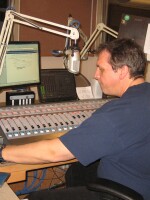
KLCC’s Doug Anders, the host of Midnight Passages, called Singh to discuss the upcoming performances. This interview has been edited for length and clarity.
Doug Anders: Has there been the poetry of Langston Hughes involved in inspiring you? Or, tell me a bit about your process for this one.
Singh: On this show, “Hold Fast to Dreams,” I made a point of spending a lot of time reading the script and watching Darius perform the show. Because he performed before without music, and then he performed it with just a little bit of music here and there—a gentleman on stage playing percussion and guitar and soprano sax.
I wanted to watch Darius acting, the interpretation of the poems and the dynamics. So by the time I wrote the first note for the show, I had already spent a great deal of time with the material.
Anders: What would the audience expect to experience when showing up to this performance?
Singh: First of all, we have a jazz quintet with some good friends of mine who are amazing musicians here from the Portland area.
The first thing people might wonder about the music before they watch the show is ‘what kind of music would accompany a show about such a specific era of black history, about Langston Hughes? What kind of music would a composer write for that?’
A decision that I made before I started composing this music was that I wouldn't write something that was trying to be too authentic of that era [The Harlem Renaissance period].
Of course, some of the music is inspired by and informed by Duke Ellington, by Thelonious Monk. But there's much of the music that accompanies many of the poems that are like movie scores, ambiance and creating atmosphere, and in a way interacting with the poems.
Because, as Darius will explain, each poem is a character. I created music for most of the poems, and whenever I did that, my aim was for the piece of music to be also a character interacting with the character of that particular poem.
Anders: You've been composing for a long time. What are some influences that you had early on?
Singh: The very year I started studying piano, when I was seven, that same year I composed my first piece of music. Which, incidentally, I still play. It was a little piece for my mom, and so I never forgot that piece.
As I continued studying and developing, composing became something that was very much part of what I wanted to do as a musician.
And composers deal a lot with the word inspiration, and for many people who are not composers, the way they see inspiration is like something that you’ll be driving or walking or working, and then inspiration comes.
Anders: Like the muse drops something on you.
Singh: Exactly, and I won't lie to you, that is possible, and that does happen. However, that is not the only way the process works. There is such a thing as simply going after the muse, searching for it
In fact, one quote that describes this process was mentioned by Duke Ellington. People would ask him, ‘to compose, do you need inspiration?’ He said, ‘no, I need a deadline.’
I love that. The music for "Hold Fast to Dreams" is a commission. I could not simply sit around and wait for the so-called inspiration to come about.
Anders: What you've described earlier with this “Hold Fast to Dreams” project sounds a lot like what somebody would be doing composing music for film.
Singh: That’s right. Writing for film, that's a long life dream of mine, something that I'm still striving to achieve one of these days, and writing these shows with Darius is great training for myself.
Actually, writing for theater in a way is more difficult than writing for a movie. Because for a movie, you’re writing music for those five minutes and then that doesn't change, unless the producer decides to add or eliminate something.
But for theater, we have to be flexible, because each performance, they're not the same. The timing may change, some of the interpretation or acting may change, so the music has to be flexible enough to move with the actor.
The thing is, even though we're referring to the group that's accompanying this show as a jazz quintet—because the configuration on the saxophone, the piano, the bass, and drums are there—this music accompanying Darius is not jazz in the sense that [anybody’s] taking solos.
Especially because before I became a jazz musician, my life revolved around classical music only. And so the music accompanying this show has jazz elements here and there, but it can be very much classical music inspired.
Anders: There's not going to be improvising in the sense of solos, but in terms of how you present it or how it's embellished.
Singh: Exactly. I'll give you an example. In this show, Darius does a lot of singing, and whenever we play those songs, when he's singing, even though we’re playing arrangements, the way we approach the song has a lot of freedom. We can swing and embellish the chords in that sense.
And another thing that I must mention, Doug, is that even though most of the music on the show is original music that I composed, we also have about six songs, they are non-original songs.
There are a couple of blues songs that Darius does. There's a song called "Grandma's Hand"s by Bill Withers. We're doing "A Song for My Father" by Horace Silver. All those non-original songs, they're arranged. I arranged them for the show.
Anders: Jasnam Daya Singh, thank you so much for taking time out of your evening to talk with us about your music. I'm really looking forward to seeing you and experiencing "Hold Fast to Dreams."
Singh: Thank you so much, Doug. And great talking to you tonight. I look forward to seeing you.