



Warning: This story contains mentions of violent crime, suicide and terminal illness.
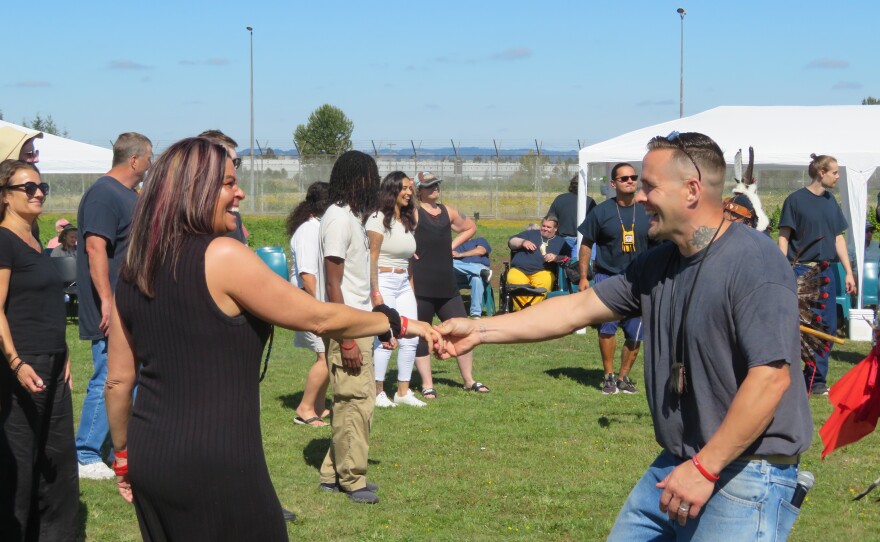
The power of a powwow has been described as a collective heartbeat that draws people together. Celebrants often say they feel unity and freedom as they dance in a circle.
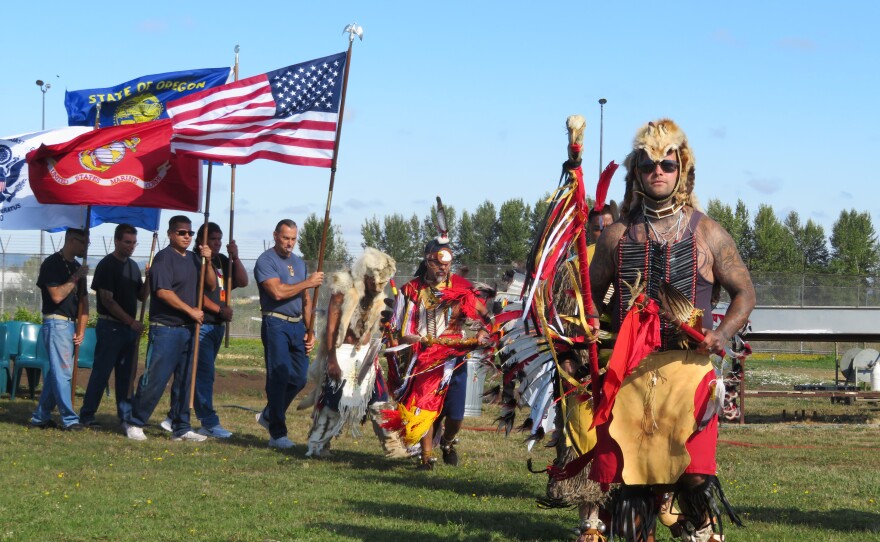
Those elements are especially vital for those serving time at the Oregon State Correctional Institution in Salem, where life is spent behind barbed wire and fortified walls. But for one day a year, inmates get to wear Native apparel and move to the rhythm of a rawhide drum with friends and loved ones.
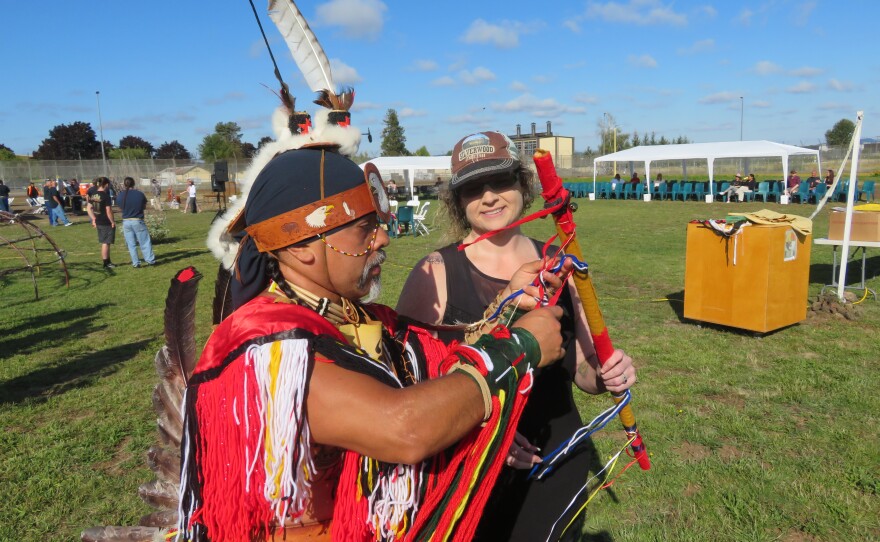
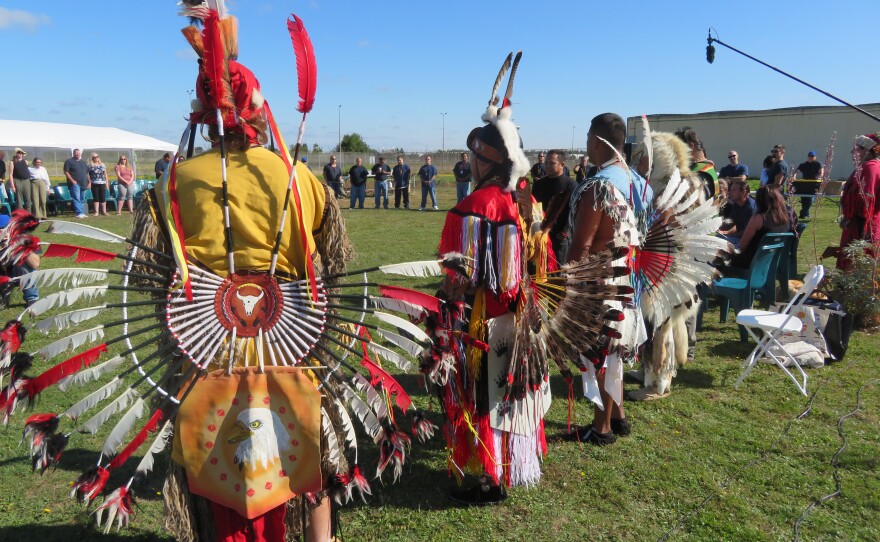
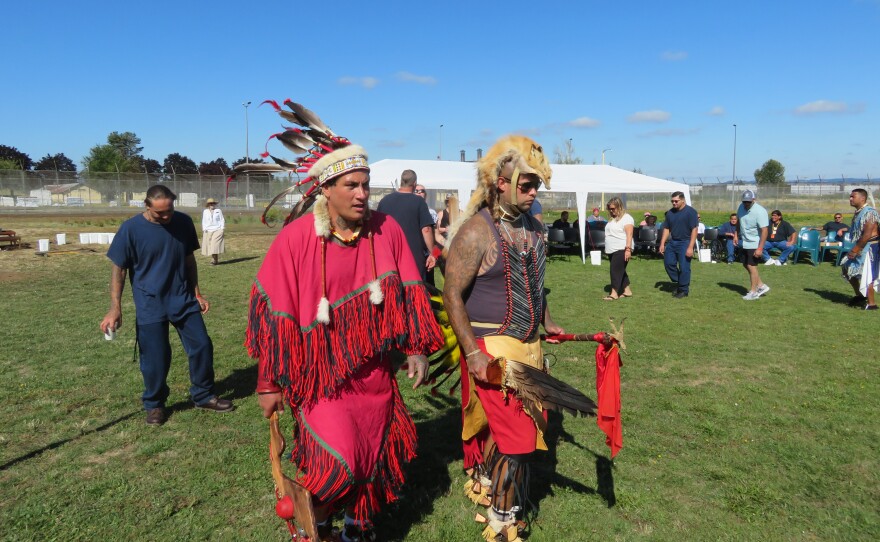
A soft morning breeze blows, rustling the frills on Anthony Salazar’s regalia. He described its colors to KLCC, as his wife, Stephanie, helped with final adjustments.
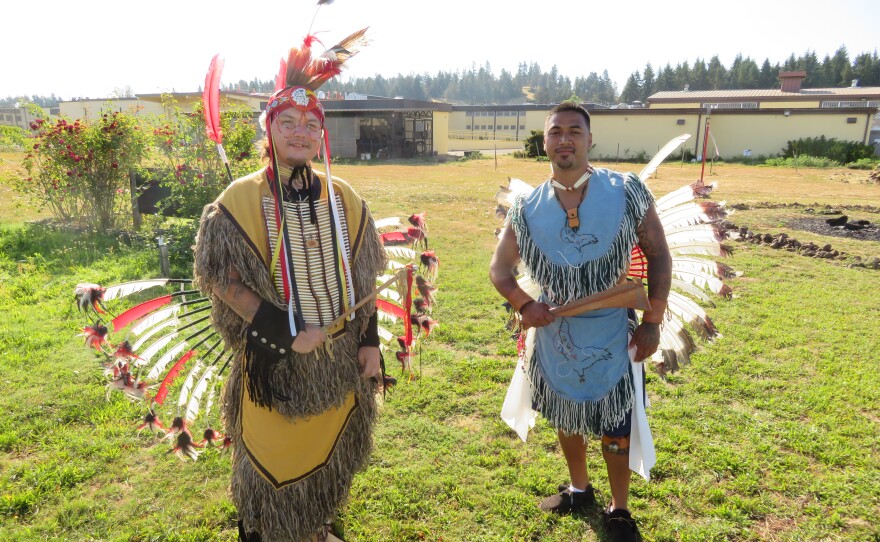
“Colors are white, black, red, and yellow, which is the colors of the four directions,” explained Salazar. “The green represents Mother Earth. All the regalia is connected to nature somehow.”

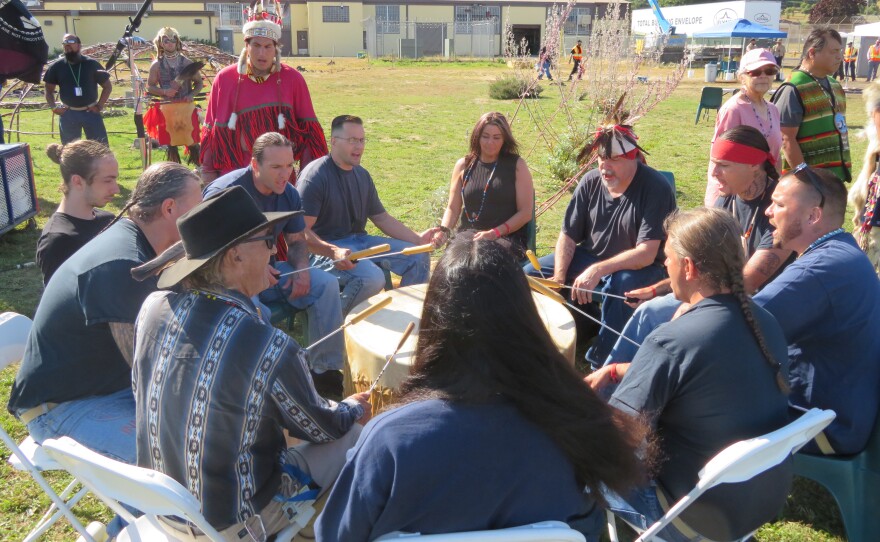
Nearby, visitors passed a man swirling a burning stick of sage on their way to rows of folding chairs lining a field. Drummers gathered in a circle, while other dancers fixed their bangles and beadwork.
A man with a microphone greeted the crowd.
“My name is Shawn Jeffers-Monro and I’m a representative of the Many Nations Club here,” he said, smiling. “We’re so glad you guys were able to make it. We’re about to prepare to do our grand entry.”
At first, you’d think this was just any other powwow getting underway.
“I'm in here for two counts of murder, and I got a life sentence,” said Salazar. “I've been in 24 years.”
Salazar, like everyone else preparing to dance or drum, is a “lifer” at this medium-security, all-men’s prison. An Apache Indian from San Bernardino, he’s thrilled to be part of the powwow, and that his wife is present.
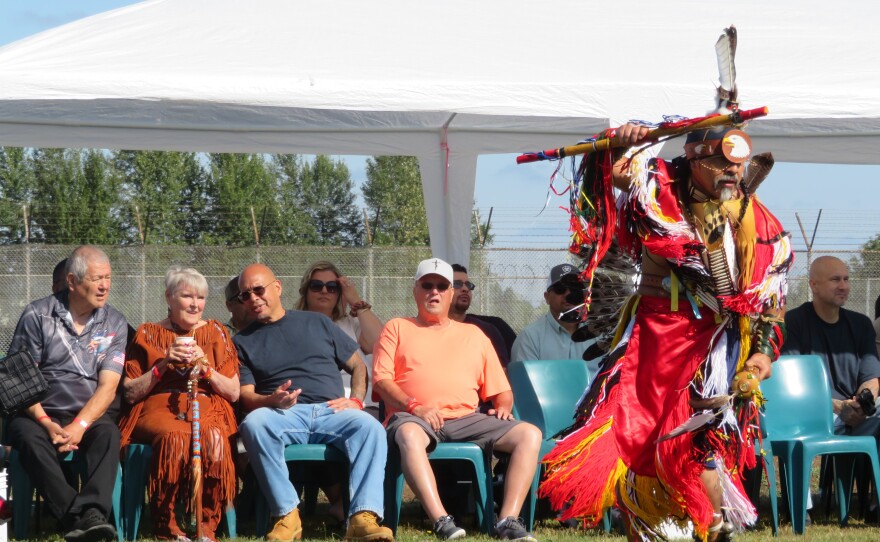
“This is actually the first powwow where I’ve actually dressed up in regalia, and I’m going to dance,” said Salazar with a resolute grin. Stephanie Salazar returned the smile, before going to the visitor’s section to watch the powwow begin.
“This is my first one that I’ve been able to come to, very fortunate to be here. Means a lot,” said Stephanie Salazar.
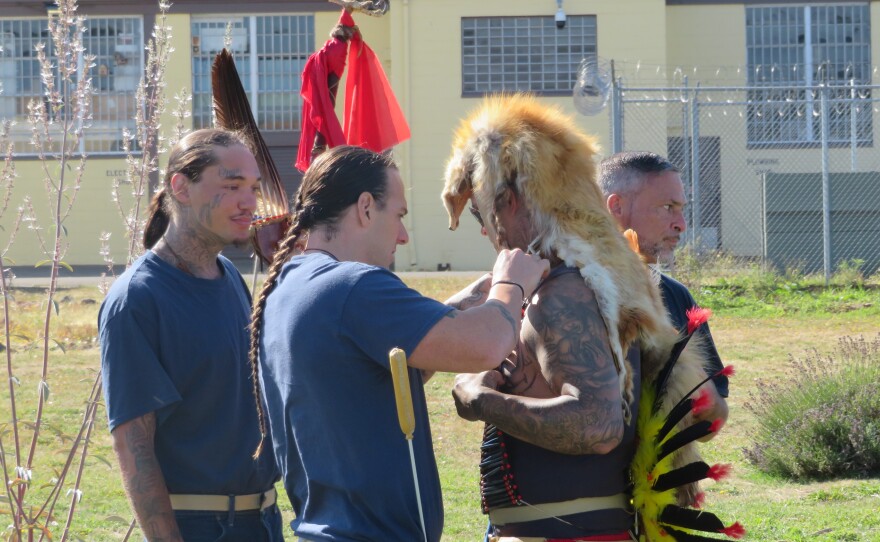
Anthony Salazar explained that there are rough six or seven pieces of regalia that have been handed down through the years by inmates. Their new users may alter or accessorize them to their liking.
“The only one thing I pieced together was my prayer stick right here,” said Salazar, running his fingers across it. “I got a feather right here. My brother passed away, so this is in honor of him.”
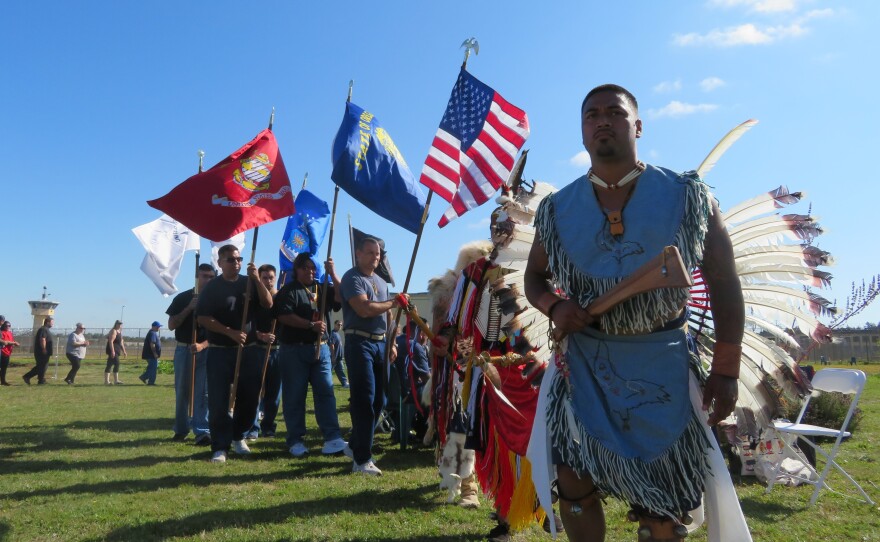
All dancers circled the field for the grand entry, while a lone red-tailed hawk soared high above. It was a simple but powerful symbol of freedom in a place where guard towers and checkpoints remind everyone this is a prison.
Nestor Diaz-Miller, with the Cow Creek Band of Umpqua, said participants practice for the Many Nations Powwow all year. He said when he first came here, he knew nothing of his Native heritage. Serving 25 years to life, he added that the powwow and the prison sweat lodge saved him.

“I’ve dealt with suicidal thoughts and actions in my past, and being able to focus on this inipi, this sweat lodge and that drum, literally saved my life,” said Diaz-Miller. “It’s given me something to believe in, something to hope in. It’s such a special feeling, I can’t describe it other than special.”
No one present recalled just when the first powwow happened here at OSCI. But inmate Charlie Tladatsi, of Mescalero and T’Salagi descent, said it’s been happening at least 30 years, back when he was first sentenced here. In that time, he’s reflected much on the event’s restorative and rehabilitative powers.
“When people connect with their culture, the things that are already in their blood and their DNA, it helps perspective,” he said. “So when we change the way we think, we change the way we behave. And a lot of us are here you know, because of the way we behave. So the idea is if we get well here, we’re well when we go home.”
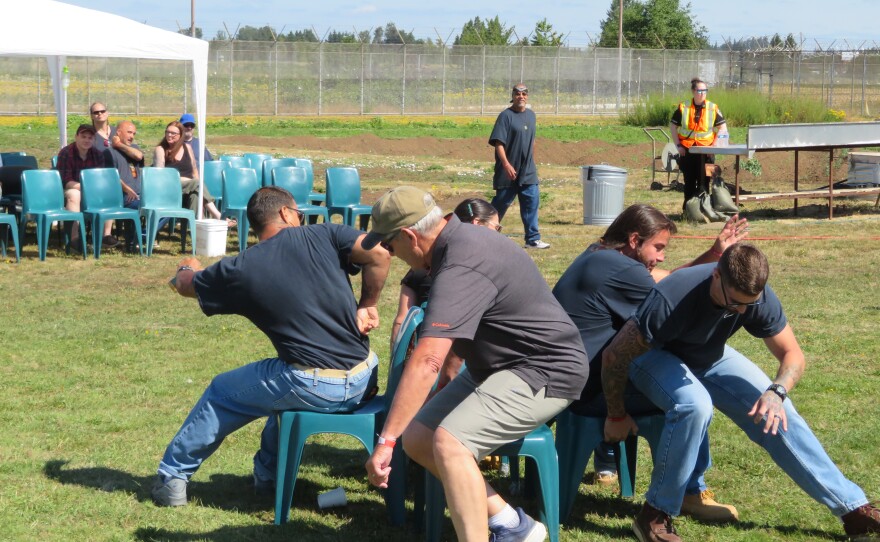
There were other events, including Native storytime with visiting Shoshone-Bannock tribal elder Ed Edmo, who used puppets to play out old legends and myths; a feast with frybread and elk meat; and even a powwow version of “Musical Chairs” where inmates and guests shared laughter and time together in the powwow space.
Emcee Shawn Jeffers-Monro, who is part of the Many Nations Club and an organizer, said he was adopted by the Klamath Modoc people and has walked “the Red Road” for 20 years. He said it’s a great experience to have his wife and other loved ones here once a year.
“My mother was dying of cancer three years ago, and I was able to have this ceremony with her and these last rites, and be able to say goodbye to her,” he said. “So this is that one time of year that we get to be together as a community, as a family, and kinda be free in a way.”
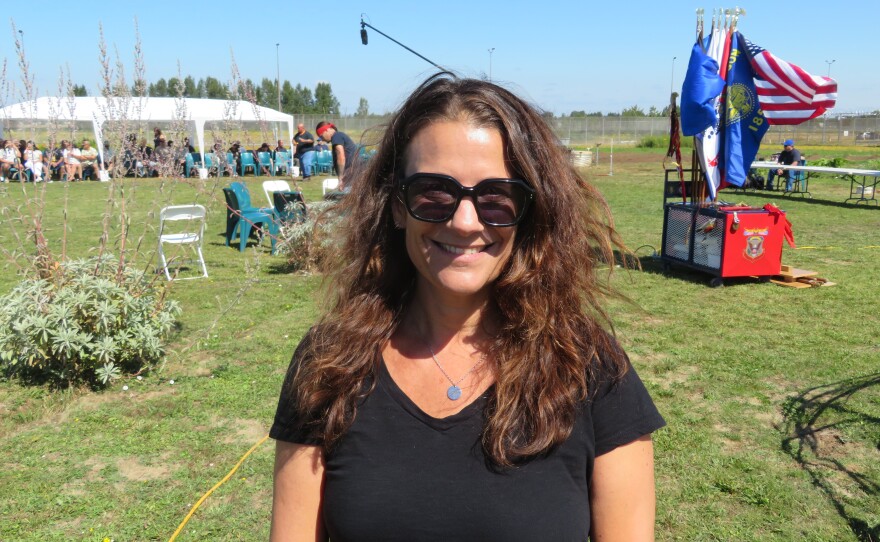
About 80 guests were in the visitors’ section. Like all visitors to an Oregon prison, each one has to go through a background check, be screened, put through security, and agree to certain rules and prohibitions, including no smart phones or garb that matches those of the inmates.
Aliza Kaplan, a professor at Lewis & Clark Law School in Portland, told KLCC that she and some of her students have been invited to this event about five times. She runs a law clinic, teaches classes in prisons, and works on legislative issues that affect many in the corrections system.

“We aim to really get to know our clients and what matters to them, and see them as more than people who have committed crimes,” said Kaplan. She said while not all prisons can allow activities on this scale, OSCI has done well in allowing the Many Nations Powwow to continue, helping give inmates an opportunity to create a positive experience.
“It’s just a perfect and beautiful day for a powwow!” she said, before returning to her students.
No one here glosses over the fact that they’re behind bars for serious crimes, and may not ever step foot beyond the prison gates. But many embrace the powwow as a way to hold on to tradition, bond, and find worth.
“People are starting to realize that they have value as human beings,” said Tladatsi. “They’re not the sum total of an event, they’re the sum total of all their lives, and everyone they’re connected to.”
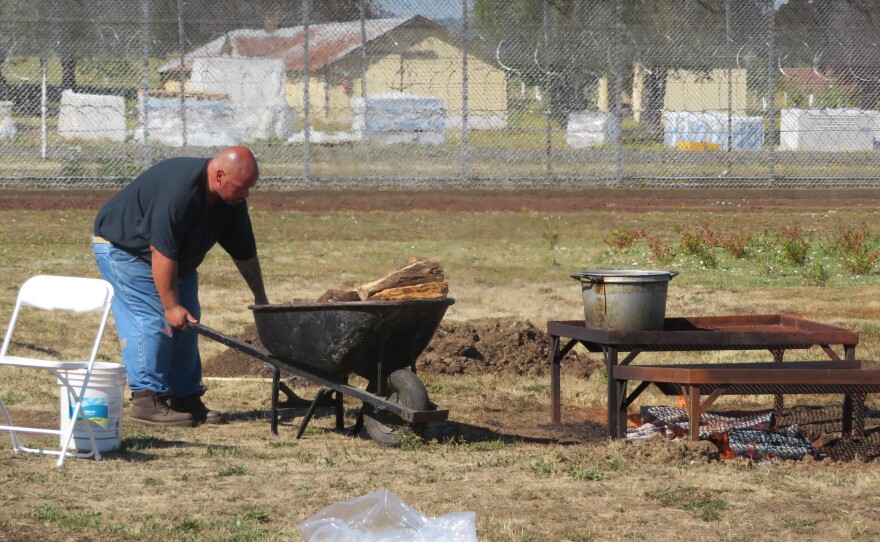
After several dances, people began lining up at tables for the feast. A large vat of stew simmered over an open fire. Drummers joked amongst themselves, visitors lined up alongside their relatives and spouses, and many talked about future powwows as prison guards circled the group in reflective vests.
“A lot of this helps keep the culture alive, so our people are not forgotten,” said Salazar. “The world remembers us.”
Copyright 2026, KLCC.


