





A nonprofit that supports youth experiencing homelessness in Linn and Benton Counties recently opened a new drop-in service center in Albany.
The Jackson Street Youth Service Center, located at 1025 Pacific Boulevard SE, is a drop-in space and outreach hub that provides resources for youth and young adults ages 12 to 24. It’s one of several facilities run by Jackson Street Youth Services.
The organization’s executive director, Kendra Phillips took KLCC on a tour of the facility recently.
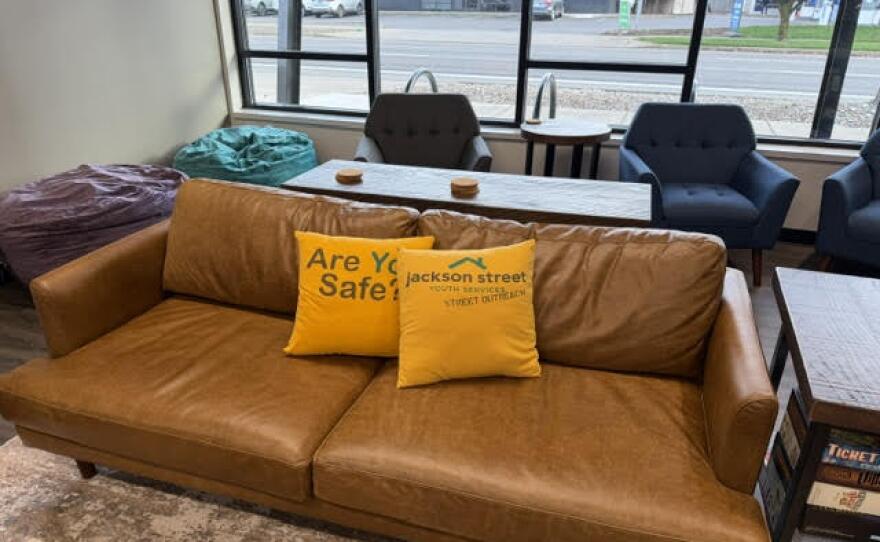
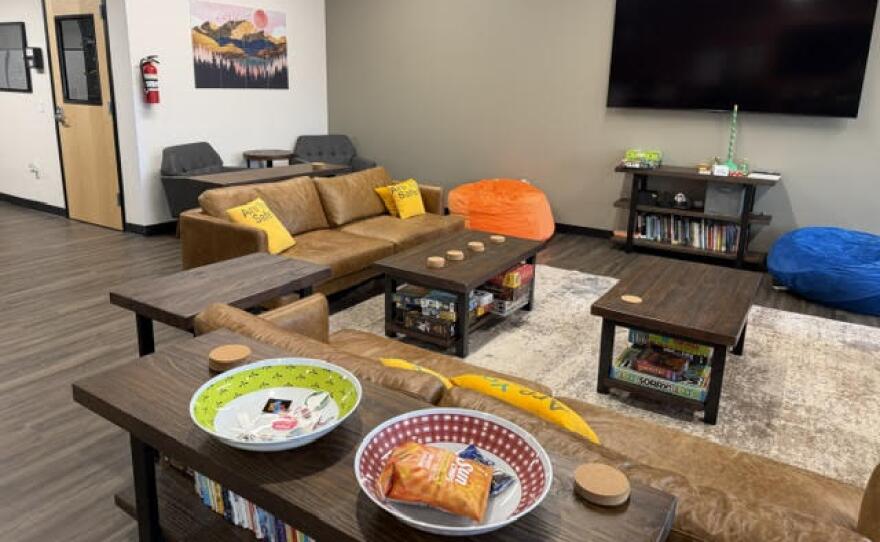
“The space that you're standing in right now is the drop-in component. So this is the big open space for youth and young adults to hang in,” she said, gesturing towards the lounge and kitchen area of the service center.
Phillips described the drop-in component of the service center as somewhere youth can come to hang out in a safe space and use the resources available there.
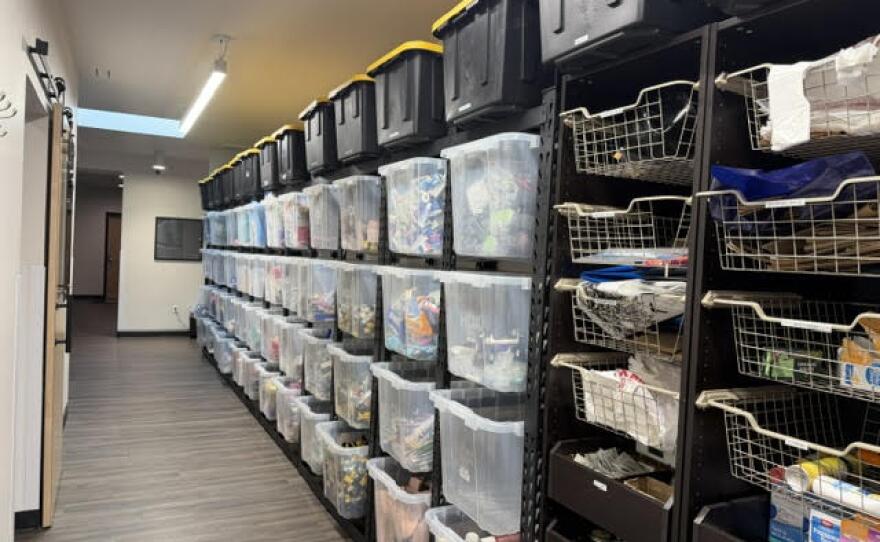
Provided resources include two laundry rooms, a shower, multiple bathrooms, a fully functioning kitchen, and a free clothing closet. There is also a large supply area full of hygiene products, school supplies and warm weather accessories like scarfs and gloves, that are also free to take. Young people are welcome to come in during drop-in hours and use any of these facilities, no questions asked.
“Our intention was to make it as low barrier as possible so that youth and young adults didn't have to ask to get their needs met. If they need a toothbrush, they can just come in here and grab a toothbrush. Or if they want to look through lotion and find one that they love, they can do that. They do not need permission from our staff to get what they need or want,” Phillips said.
Creating a low-barrier access point for resources is the main purpose of a drop-in service center. Young people are able to come in and get what they need, whether that be physical supplies or connection to more of Jackson Street’s services.
The other half of the service center serves as the Jackson Street Youth Services outreach hub.
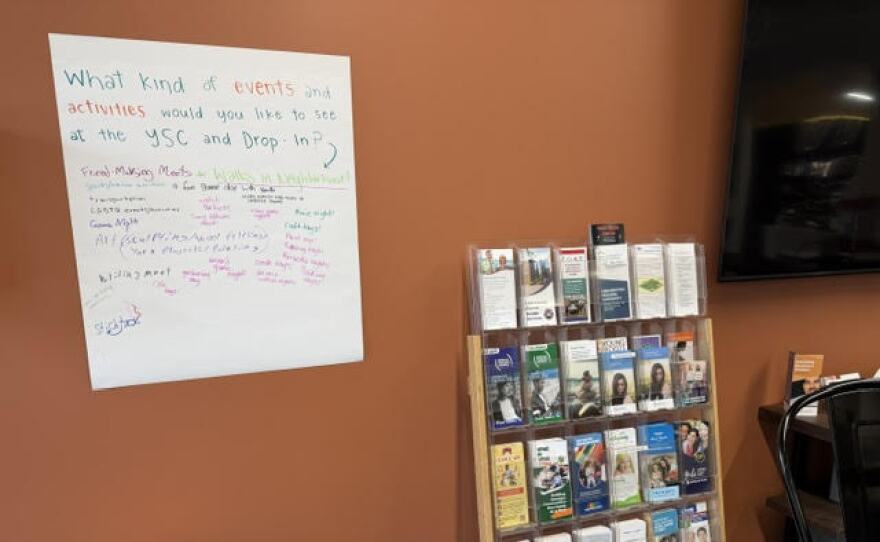
Through the outreach program, youth can be connected to various resources both within and outside of Jackson Street. The service center works with health providers in the area to provide mental health service referrals, case management referrals, and STI testing.
Additionally, there are opportunities for connection through Jackson Street programs like Queer Peers, an LGBTQA+ focused support group, or Connection Cafe, a weekly hour to socialize with peers over hot drinks.
Outreach Program Manager Anna Bontrager said that the variety of resources can make it easier for youth to gain access to what they need.
“It can be a bridge to our continuum of care, but also to just getting to the starting line, and having it be a little bit easier to access than having to go to these other places to get all your needs met. There's a lot of red tape and processes to navigate, so we're here to try to lessen those barriers,” said Bontrager.
When a young person enters the service center, staff will ask them what resources they’re looking for and will connect them with those resources. Even if they don’t know what resources they need, the staff will work with them to find the appropriate support. This support may be connection to Jackson Street’s emergency housing, or it could be connection to resources that can help prevent homelessness.
Phillips said that although they are an organization that focuses on youth homelessness, prevention of homelessness for vulnerable populations is a key aspect of the center’s services.
“Folks can be at risk. They can be from a vulnerable population, youth of color, youth who identify as LGBTQ, low income. A lot of families can't put food on the table every night, and we want this to be a place for those needs to be met,” said Phillips.
Entering the service center is the only step youth need to take to begin to receive help from Jackson Street. Program Coordinator Salvador Maciel said that sometimes the hardest step can be the first ask for help, and that the service center will be able to make it more accessible.
“Just them walking in this space is going to be super important, because that's them asking for help, or connection, or a safe place, or somewhere to belong that they can be seen and not brushed under a rug, and be able to have a space in our community,” said Maciel.

