The following transcript was generated using automated transcription software for the accessibility and convenience of our audience. While we strive for accuracy, the automated process may introduce errors, omissions, or misinterpretations. This transcript is intended as a helpful companion to the original audio and should not be considered a verbatim record. For the most accurate representation, please refer to the audio recording.
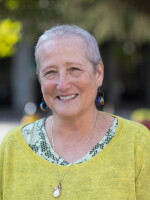
Barbara Dellenback: From KLCC Media, this is “The Oregon Grapevine.” I’m Barbara Dellenback. “The Oregon Grapevine” highlights fresh-pressed conversations with people who are actively and passionately creating the present and future in which they wish to live. John Sutter is an academic expert in climate change communication and a professor at the University of Oregon’s journalism school. Thank you so much, John, for coming in to “The Oregon Grapevine.”
John Sutter: Thank you so much for having me. It’s a pleasure.
Dellenback: I know there are many projects we could start with, and one of them, perhaps the most recent, has to do with wildfire smoke, which is on a lot of people’s radar. So I’d like to start there: How did you get to that place, and why wildfire smoke in Oregon?
Sutter: Yeah, so I did a piece for the Guardian fairly recently on Josephine County, which has the highest mortality rate, the highest death rate, from wildfire smoke in the country. I came across that stat in an appendix to a Nature article that was estimating deaths from wildfire smoke linked to climate change around the country. I saw that superlative and was just curious about why that was the case, and what it’s like to live in this semipermanent, ever-present state of smoke being a factor in day-to-day life and a major health concern. Here in Oregon, and I’m fairly new here, by the way, I moved here about two years ago, people are very familiar with the risks of wildfire. I think we’re somewhat less familiar, or the people I met in Josephine County were less familiar, with the real risks of wildfire smoke, which is extremely deadly, especially when you’re exposed to it over long periods of time or if you have other conditions. So it was a curiosity about what’s going on in this place and what it’s like as a microcosm, an extreme microcosm, of living with smoke season instead of summer, essentially. I went and spent about a week down there, meeting with people and trying to understand, as an outsider and as someone who’s fairly new to this region, how people try to stay safe, how they protect each other, what they do or don’t know about the risks, and what it’s like to live with a slow-moving threat like wildfire smoke that’s linked to climate change.
Dellenback: I have family members who lived up the McKenzie in 2020, when that fire took place, and they’ve all moved. So there’s also a phenomenon beyond it being unsafe in the moment. We could talk about whether it might or might not be safe to rebuild where the plastic was melting into the earth. That’s a different conversation. But what about the people I’m hearing about who are extreme weather activists, as it were? People who are saying, “Wait a second. We should no longer just be complacent about breathing bad smoke.” Are you, as a journalist and as a professor, hearing about that? And is there advice for them, or things you can say to them in terms of what they should be learning?
Sutter: Well, I think when you zoom out a little bit, there are two things going on with climate change that are frustrating and seemingly at odds. One is that we shouldn’t accept this as a reality. We are doing this. That study in Nature was about deaths linked to climate change, so not just wildfire smoke in general, as a phenomenon that has always happened here, but smoke that we are supercharging by making the world hotter and burning fossil fuels. That part of it is, I think, really frustrating and deserves pushback. We can make the world safer by getting off fossil fuels, and we should be doing that as fast as possible. So that’s one side of my brain in climate land. People call that mitigation: reducing the pollution that’s causing this. The other side is that this is a changed world we live in. We live in a different weather regime than any of us grew up in, and certainly different from what previous generations experienced. The world is about 1.5 degrees Celsius hotter than it was before the Industrial Revolution. There are real consequences of that, some of that in this moment is unavoidable, and we have to adapt to it.
One of the things I found very heartening in Josephine County was the degree to which people really love the place. It’s gorgeous there. There are two magnificent valleys that draw people from around the world for a bunch of different outdoor recreation reasons. There’s a huge banner over the main road in Grants Pass that says “It’s the Climate.” That was sort of a flex back in the day, with locals saying it is so lovely here and that they are really proud of this place, particularly its mild weather and climate. That’s taken on an eerie undertone in the present tense. But I don’t want to discount that. The families I spent time with really are grappling with how to love a place that’s dangerous, and we’re all doing that in our own ways. I don’t say that meaning to normalize what’s happening or to be blase and accepting of it, because, like I said, I find it very infuriating on one level. But we’re also living in it, and we have to find ways to have joy and connection with the places we call home. I really did see that in a meaningful, human way in Josephine County.
I spent a lot of time with a family that owns a gallery called It’s a Burl. It’s a woodworking gallery. A burl is that knotty growth you sometimes see on the trunk of a tree. It’s a difficult wood, and from the outside it looks almost unwell, you know what I mean? It’s often caused by distress, actually. But when you cut into it, you get these beautiful, swirling, artistic patterns. The family that owns that gallery lost someone in a wildfire smoke event. A preexisting health condition plus the smoke contributed to his death. So if anyone is familiar with the risks of this place, they are, and yet they’ve stayed, and they continue to find and make beauty in this place that is difficult. I think Josephine County is a turned-up version of what the rest of us might be experiencing. We’re all grappling with things like that, and that’s why I found it to be such an interesting and relatable place.
Dellenback: Let’s move to the world of journalism and being a professor in the journalism department. You haven’t been there long, necessarily, although you’ve been a journalist longer than that. In your observation, in terms of the kids you’re teaching, or maybe the adults you’re teaching, what is journalism? What is it they want to do? Why are they in that department? What is it you hope a journalist is doing?
Sutter: I hope that as journalists, we’re seeking truth and reporting it. For me personally, it’s a way to explore the world and try to understand it, to try to understand myself and my own story, and to try to understand the people around me. I think we love the world, care about it and advocate for it, and can be better people and citizens when we know more about what’s going on around us. Honestly, I feel like one of my biggest teaching lessons is just pushing young journalists out into the world and giving them permission to move around and ask questions. I don’t like to make too much of the COVID generation effect, but I do think that for all young people, and this was true of me in my teens and 20s as a journalist, it’s scary to go out, wander around and talk to someone new you don’t already know and don’t have a rapport with. It’s scary. It can be invasive. It can cause harm if done without care. My nudge to them is: This is your world. You’re living in it. Be part of it. Interact with it. Try to understand what’s going on. I had a mentor, Jacqui Banaszynski, who always said, “Live your life as a question.” For me, that is one of the essences of being a journalist. You’re always asking questions about things, and you’re willing to put in the effort, in terms of traveling, moving about, talking to people and doing research, to find answers and get as close to the truth as possible.
Dellenback: Newspapers obviously aren’t as frequent as they used to be. Printed journalism isn’t necessarily the case anymore, in terms of hard copies, magazines, etc. So as a graduating student, let’s say, what form do you think people imagine they’ll take as journalists? If that makes sense, where do they go?
Sutter: Yeah, I think that’s an ever-changing question, and I don’t say that as a dodge. I went to Emory in Atlanta, and I graduated in 2005. There was a time when I was an undergrad that I pictured a very clear track to working at newspapers or a wire service, working my way up and doing national or international news. I did do some of those things, but I took a really circuitous path there, because even then, the implosion of newspapers was beginning in a different form, and I just had to learn to be really flexible and creative. I loved the freedom of digital news and being able to present stories in whatever formats and mediums were exciting to me at the time or fit the story I was trying to tell. I work a lot in documentary. I started in print, at a newspaper in Oklahoma, where I’m from. So I try to teach some actual hard skills around creating media in various formats, but also a sense of curiosity and adaptability, because I think the world as it exists now is not the one they will be working in in 10 years.
One of my classes is basically an environmental journalism class. It’s called Living in Our Valley, so it’s about environmental issues in the Willamette Valley. We have a class Substack newsletter, so they publish pretty regularly on there. There’s a freedom around it: They do audio stories sometimes. They’ll do video stories sometimes. Sometimes it’s a very traditional, print-style written piece. But again, I teach getting out there, finding things out, telling that, processing it and finding the next thing. I want them to not be too precious with everything. That sounds wrong, but I want to give them practice at the repetition, getting the muscle memory of creating things and having that be part of their practice. So I teach some social media. I think it’s about being in all the spaces where stories are happening now, even engaging with AI, which I know is controversial. Being aware of those things and learning to work in and around them is important. And then there’s also this sort of uber skill that’s more of a life skill: How do you respond to the world around you, chart your own path, and have an ethical take on what’s going on and what is and isn’t OK for you and your practice? I want that sense of groundedness and centeredness to be what they carry out of the program.
Dellenback: Do you have, or hear, conversations about where to go? It’s pretty overwhelming. You can go online and find a bunch of stuff. Some of it’s, quote, true. Some of it’s, quote, not true. Some of it’s down huge rabbit holes. Some of it’s actual journalism, whatever that is. Do you have those conversations about how to look out for wherever it is you’re going, and encourage certain pathways?
Sutter: Yeah, I think it’s interesting. I ask students where they get news, and surveys indicate this too: A lot of it is online. Obviously, social media is a big part of it. YouTube is a huge part of it for them. So in some classes, especially a science communication kind of class, I do case studies where I have them bring in a piece of media and look at the building blocks of that piece of communication. Who made it? What might their motives be? Who paid for it? What is the reach? How many people are seeing this? Who are those people? How are they responding to it? Sometimes you can see that in the form of comments or other posts about it. So there’s that practice of deconstructing media, acknowledging that it doesn’t just appear out of a vacuum, that there’s a person or people or giant organizations or corporations making it, or optimizing the algorithms that sent it to you. We try to talk about all of that critically so they can better understand the media ecosystem, which is frustrating and scary. Just to be honest, it’s a Wild West kind of world in the media right now. I hope giving them some templates for analysis and breaking things down serves them well in life, just as people who are trying to understand the world around them, and also as journalists or communicators going forward.
Dellenback: Climate change is clearly a topic you’ve become an expert in, that you teach about and learn about, and it has changed over time. I know one of the classes you’re teaching has to do with that change and the changing perspective on it. I’d love for you to delve into it a little. The information is clearly different than it was 20 years ago. The way we’re getting the information is different. Things are happening. How do you frame that conversation?
Sutter: Yeah, I teach a class called The History of Climate Media, and it starts in the 1800s, believe it or not. There’s one of the first moving image films. It’s about a minute long, of an oil field fire in Azerbaijan in the early Industrial Revolution. It’s a spectacular image: flames and smoke. It’s kind of wild and unbelievable and very captivating to watch, even though it’s just a silent black-and-white image from the late 1800s that looks very grainy by our standards today. We talk about how long we’ve known some of the basics of climate science, which really does stretch back almost that far, and which then emerges as a really serious public conversation in the ’70s, ’80s and ’90s to the present. My goal with that class, in part, is to stretch our collective memory. It’s tempting to say that climate change is a new or modern phenomenon, and it is. It’s accelerating. But it’s also a conversation we’ve been having for a very long time, and the science of it has been fairly settled. It gets more and more nuanced and specific, but it’s been very settled for a long time. So I want to look at how we’ve tried, or failed, to tell that story across many decades. My hope, and some of the assignments at the end of the class, are about finding ways to circumvent that: What could be done differently? I don’t want to put it all on the shoulders of communicators, as if we would have solved this crisis if we had done better. But I do think there’s a true crisis around the communication of climate change and climate science, especially in the United States.
So I want them to think about that. It’s fairly shocking for some of them to look at, for example, TV news coverage of the first Earth Day in 1970. When I was teaching in D.C. before coming here, a student came up to me after that class and said, “I’ve held those same protest signs.” She was very involved in campus activism and was alarmed by that, because that protest was about clean air, but it was also about climate change. That was a bubbling conversation. So reflecting on that and thinking about the timescales involved in climate is very interesting to me, and also motivating. If we know that history, we can learn from it, and we can realize that it’s a stall tactic to keep pretending this is new information. It’s a stall tactic to keep pretending we have all this time to bridge to some clean energy future. We’ve been doing and saying that for many decades now, and it looks really different when you zoom the lens back and look at it holistically.
Dellenback: As a senior citizen, and with other senior citizens I know, it’s easy to look at college-age kids or younger people and think it’s pretty bleak: what’s being left for them, the situation they’re in, etc. It looks like it can be a difficult climate, if you will, to think about doing something interesting and living your life. Is that your experience with your journalism students?
Sutter: It’s another “yes, and” kind of thing. I think it’s incredibly unfair what we have all dumped on them, in the form of the climate crisis, in the form of a giant war, in the form of AI. There are so many ways in which this generation is dealing with new and intensifying realities. I do think every generation has its version of that, and I do think they’re up to the challenge. I teach because I really care about the future and I care about mentorship. Selfishly, it also gives me energy. I encounter students who are very motivated to try to be helpful and make the world a better place, and I find that infectious. As someone in his mid-40s, I sometimes need a jolt of that. So I’m optimistic about this generation, both their skills and their hunger and curiosity. It is an unfair world. It always has been, and it feels acutely that way right now. But I meet a lot of students who really care about trying to make it a better place.
Dellenback: You’re working on a couple of side projects, kind of fun projects. Talk about them.
Sutter: Yeah, I’m a climate journalist and a filmmaker, and I work on a range of things. I have a short film coming out in December at the Anchorage International Film Festival called “When the Sun Never Sets.” It’s set in a community in the Arctic called Shishmaref, Alaska, which is a place I’ve been working since 2009, I think, when I first went up there for a story. Over the years, I became close with a family who lost someone who fell through the sea ice on a spring hunt. It’s a place on the coast, and hunting out on ice that’s floating on the sea is a big part of survival there. So I made an observational film with a grandfather and grandson going out on the grandson’s first seal hunt, and we went out on the boat with them. It was a two-day overnight expedition, which wasn’t expected. The ice sort of moved in behind us, and we were stuck out there. A little bit scary, but also good in terms of filming. It’s filmed at a time when the sun never sets, so you experience this limbo state where the sun is almost grazing the horizon and everything is iridescent colors of ice and water. Honestly, it’s the most awake hallucinogenic state I’ve ever been in, floating out there, where you can feel completely unmoored from other, land-based versions of reality. That’s something people there are super familiar with. I grew up in Oklahoma, totally landlocked, so that’s a wild other reality for me. Anyway, it’s meant to be a story of quiet determination and resistance to warming. This is becoming more dangerous, and yet it’s an important cultural tradition and a really important means of survival. So these lessons and stories are still passed down, sort of from hand to hand, in that tradition. I’m excited about that film.
I have a much longer-term project, partly in that community, that’s following a few places on the front lines of climate change on a really long timescale, from 2020 to 2050. Again, I’m really interested in how we make sense of something that is so much larger than us in terms of the time involved. We tend to operate on “What does my calendar look like today?” At most, 30-year mortgage plans are the biggest chunk of time that enters a lot of our lives, but carbon pollution stays around more than 1,000 years, contributing to warming. So in a way, we’re alive in that future. We’re actualizing a version of that future, and I think feeling connected to that can be motivating. So some of my work is interested in the generational story of climate change, how we’re connected to future generations and what we might owe them.
I mentioned I’ve only lived in Eugene for the last couple of years. I love our airport dearly, which probably sounds strange for a climate journalist to say. I have a piece in Oregon Humanities magazine in December, which is free, by the way. You can subscribe online, and they’ll send it to you. It’s about my love for the airport and falling in love with Eugene. I’ve lived all over, and I’ve moved a ton in recent parts of my life. I’ve lived in Oklahoma, Atlanta, D.C., Salt Lake City and briefly in Madagascar. I’ve just bounced around a lot, and there’s something about landing at the airport here, seeing the forest, the smell of the air, but also the Flying People installation in the airport, that just makes me feel prematurely at home. When I first arrived here, it helped me start to feel this is a place where I can be rooted and care about and know the people. I’m sure anyone listening in and around Eugene knows the Flying People installation. At this point, it’s 96 full-size human portrait sculptures: black-and-white photographs of people attempting to fly, dressed as a nun and a logger and a businessperson. It has this kind of “Reading Rainbow” aesthetic that I find incredibly charming.
The photographs were taken in the ’80s, and recently I spent some time with the artist’s widow, Casey Joyce, and walked around the airport with her, which she hadn’t done in a couple of decades. I sort of met the people of Eugene through her, people of that time, people in this time capsule, many of whom have passed on, which I think is a powerful image. I love that this community holds those people so dear. They’re a symbol of permanence in a place of transience. You’re coming in and out of the place if you’re in the airport, but they remain, and they’re there to greet you. It’s sort of an offshoot of a lot of my work that’s on climate and heavier, serious issues, but I just find Eugene and the airport so charming, so I recently put some energy in that direction.
Dellenback: That’s awesome. I was actually living here and knew several of the people who became flying people. I’ve wondered, because they’re not all up, whether there’s a stash of them somewhere. But I don’t know the answer to that question. I knew him a little. They’re pretty cool. I agree.
Sutter: Some of them. There were many more to start with. In 2015, I believe, when the airport was renovated, quite a number of them were taken down. I think some were given away or sold to the people in the images. So there’s a flying pregnant person in an apartment in New York City, for example, and the child who would be born from that photograph is now a philosophy professor at Rice, because it was almost 40 years ago. So some of the flying people have scattered and are no longer in the airport, but quite a number of them should still be there.
Dellenback: I mean, flying people should disperse, right? Yeah, they should disperse from time to time.
Sutter: But the artist’s own portrait, David Joyce’s, is there near baggage claim. His wife’s portrait is near TSA. Their daughter is in the A gates. I found it really heartening and interesting to hear about their stories and his motivation for making those images, which is that he wanted people to be photographed the way they want to be seen. As a kid, he had some negative experiences being pushed to be seen a certain way in family photographs and feeling really repressed by that. So it’s meant to be this kind of freeing self-expression, and I just find it very charming and cool.
Dellenback: What inspires you to do the work you do?
Sutter: I think I get inspired by questions, and by gray areas, areas where things aren’t totally worked out. It’s as simple as, with the Flying People: Who made this? Who are these people? Someone on campus mentioned to me that they’re local residents, which is something I didn’t know, and it made it quadruply meaningful as soon as I learned that fact. So curiosity about that led me to explore it further. Journalism and storytelling can sometimes be an excuse to find things out that you really want to know. And if you bring people along on that journey, at its best that can be infectious and can lead people to want to know more about the world, too. With climate, I turn toward it rather than away from it, because I find it paralyzing and scary and overwhelming, and I think we can’t look away. It’s so important, so I really consider it a motivating challenge: How do we get smarter, more creative and more human in the way we approach what we’re doing to ourselves and to the world around us, and engage with that even when all the incentive is to just turn and cower? Like I said, I’m really interested in the fact that we’re connected to many future generations through what we’re doing to the atmosphere. There’s one version of that that’s completely paralyzing, and there’s another that’s really hopeful and motivating, because we’re connected to those people, we owe something to them, and we can and do have the power to make things safer and better. So it’s part mission-oriented for me, what deserves and needs our stories and our attention, and part personal curiosity quest, having a fun excuse to put on a different hat that allows you to ask people questions and go new places.
Dellenback: Thank you so much, professor John Sutter, for coming in and talking about a variety of things. I appreciate you being on “The Oregon Grapevine.”
Sutter: Thank you. This is a joy. I appreciate it.
Dellenback: You’ve been listening to KLCC Media’s “The Oregon Grapevine,” fresh-pressed conversations with people who are actively and passionately creating the present and future in which they wish to live.