


Construction on residential lots that run along the McKenzie River near Walterville will have their day before Lane County Commissioners on July 7.
The two lots have seen years of unpermitted construction by the owner, a former timber company owner, and will now go before elected officials–despite two rejections by county staff, concerns from a state wildlife official and objections from neighbors and environmentalists.
On paper, the two lots contain a 1985 home that required years of back and forth to get permits. The other has no valid construction permits.
But, as neighbor Mark Shaffer points out from the side channel of the McKenzie that separates the properties, that’s not the case.
“Right there is a shed, and right there's that retaining wall, and you can't see it through there, but right through there is that other [accessory dwelling unit], that's the original building, and on the other side there's another,” he said during a recent visit to the site by KLCC.
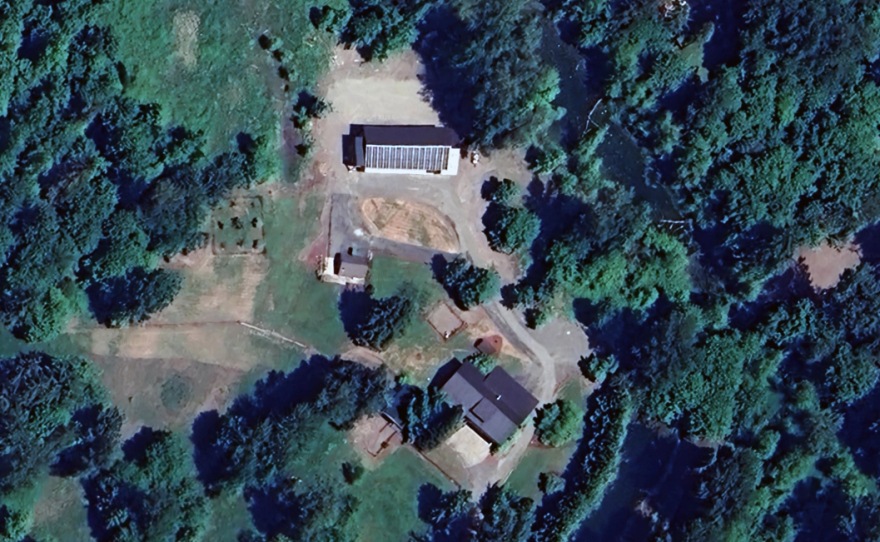
Jones-McCann property on July 30, 2018 and May 30, 2024
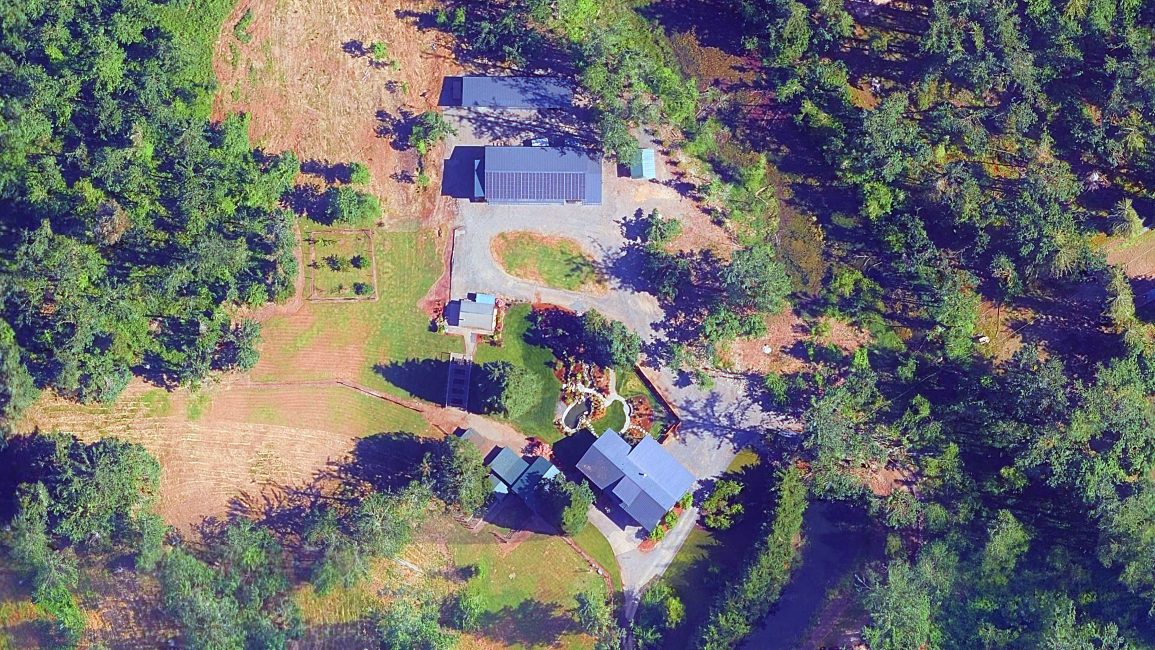
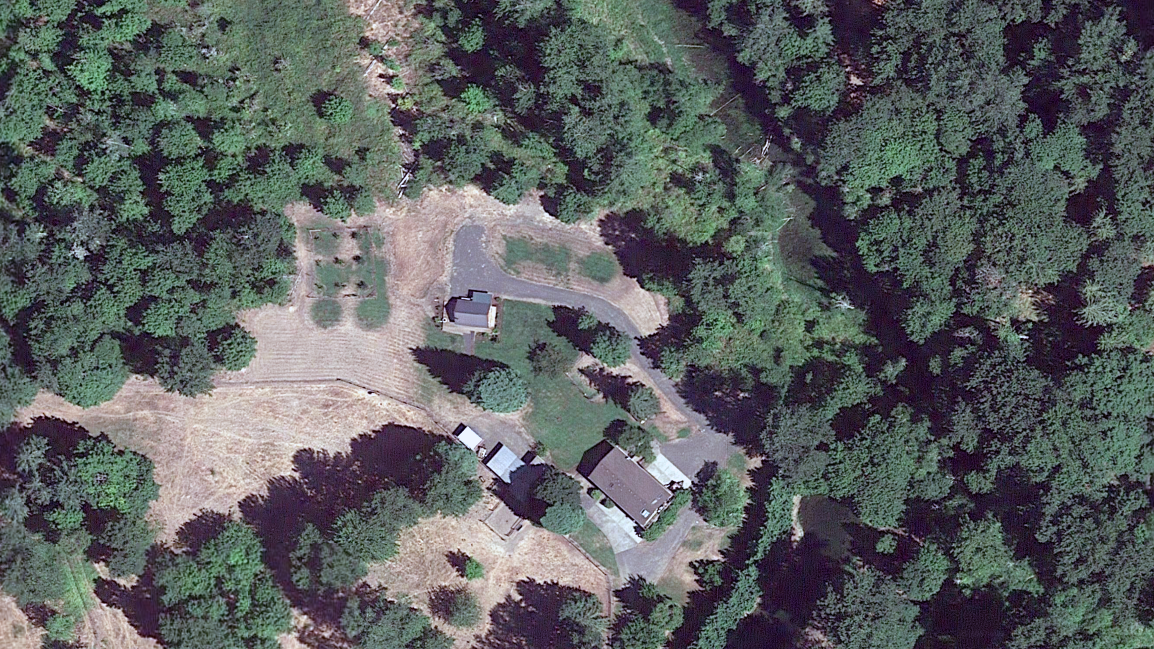
The Eugene Weekly reported that three outbuildings totalling more than 5,000 square feet, a solar panel array and a 96-foot-long concrete retaining wall have been built, all without permits.
Lane County has issued multiple orders to comply with permitting rules, first in November 2023 and again in September 2024.
Google Earth images show work continued between those two orders.
Both notices gave the property owner 12 business days to enter compliance before $2,000 per day fines began to accrue.

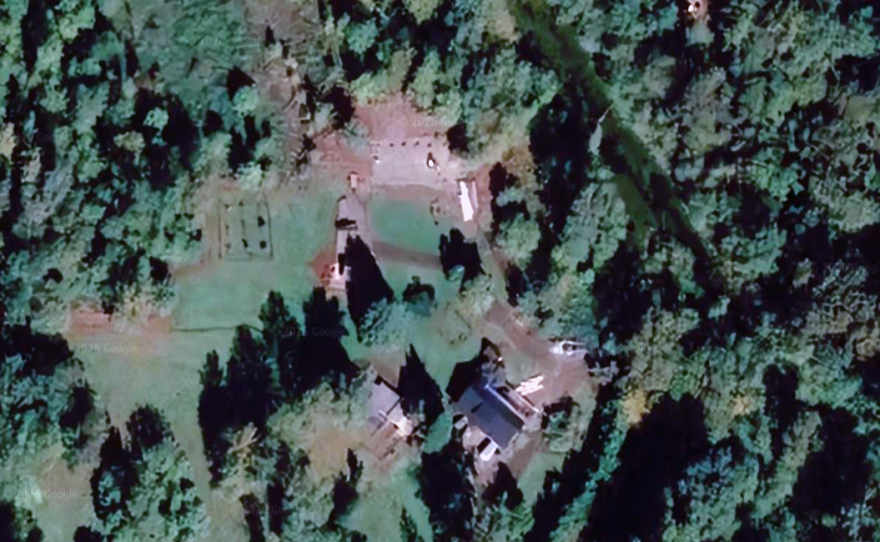
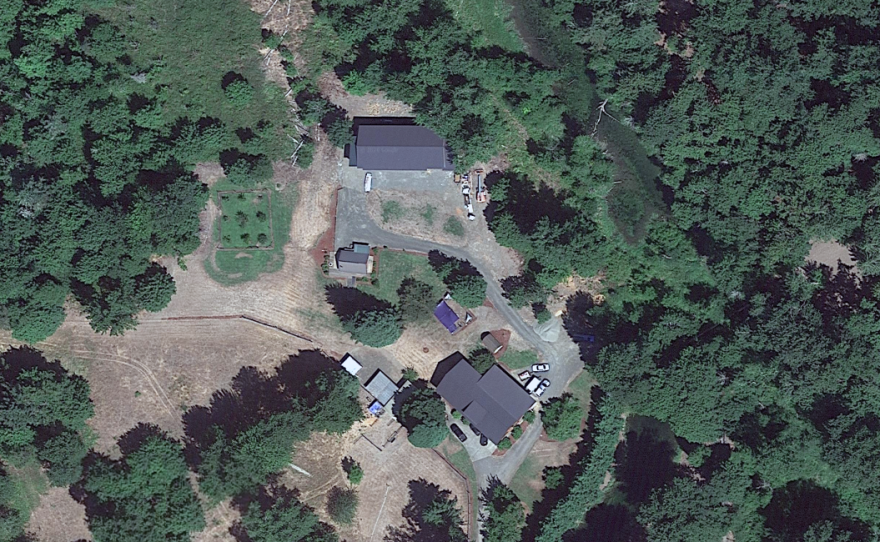

But, a county official told KLCC that those fines are on hold as permit requests filed by the owner, Kathleen Jones-McCann, sometimes called Kathleen Jones Hall in paperwork, go through the evaluation process.
Jones-McCann was co-owner of Seneca, a Eugene-based timber company that had its origins with her father, Aaron Jones. Seneca was sold to Sierra Pacific Industries nearly five years ago.
KLCC reached out to Jones-McCann and her attorney Michael Reeder for interviews in June, but they declined to talk until after the July 7 hearing.
Concerns about building’s impact on the McKenzie River
The application was first denied in April 2025 by Noray-Ann Spradling, a senior planner in Land Management for Lane County.
One of the problems she notes in the denial are concerns about building in the riparian setback area, land where development isn’t allowed.
“In having this setback, we are protecting the plants that are stabilizing the slopes of these water bodies,” Spradling told KLCC. “These are all water bodies that have been identified because they're either a drinking water source, they feed into a drinking water source, or their habitat for species that we want to protect.”
The setback is 100 feet from the high-water mark. But, her report notes not just plans to build in the area, but that the structures already exist.
Such buildings could be harmful to wildlife, according to Joe Stack, a Regional Habitat Biologist with Oregon Department of Fish and Wildlife who prepared an analysis of the application.

He focused on a side channel of the McKenzie that runs between Jones-McCann and Shaffer, and said such areas can be beneficial for aquatic life.
“They're very important for juvenile fish to go in there and hang out during high flow events,” he said. “[They can] get away from the larger fish, seek refuge, and even in the summer times they can provide cooler water.”
Stack has traveled into the side channel by kayak via the McKenzie River twice, most recently in June.
He said it’s likely the channel is home to species that have some connection to the Endangered Species Act such as the western pond turtle–which Stack said is proposed to be listed–and the spring chinook–which is listed.
Stack said he saw Oregon chub in the channel on one trip, which is the first fish species to be delisted from the ESA.
“There's also numerous waterfowl species that utilize [side channels], beaver as well,” he said. “So there's a number of species that benefit from side channel backwater habitat.”
Along with the impact on imperilled species, Stack is concerned about the fact that this property is in a floodway.
He points to an example from the 1990s of a home that was once downstream from the property.
“It's not there anymore,” Stack said. “The river moved, that house fell in. I think to not consider those impacts of a potential 100 year flood or just even the river changing, you're doing a disservice.”
He said such an event would have downstream effects on more than just wildlife.
“There are people who regularly boat the river, and that's just putting in another hazard,” said Stack. “The city water intake is downstream from there, so there's a lot of infrastructure that's downstream.”

Some neighbors objected to the permit request during public comment. While general disapproval by neighbors is noted, Spradling–the county planner–said they more often hope that neighbor feedback will include specific, factual reasons to object.
“We really have to base our approvals, denials, conditions on the criteria,” she said. “So if they have a concern that is directly related to the criteria, that is the most helpful.”
Mark Shaffer, who wrote in twice, sent a picture of what he said is a western pond turtle in the channel, as well as other wildlife, including deer. Shaffer’s legal first name is Phillip, but he goes by Mark, his middle name.
Wildlife was mentioned in Spradling’s denial, though Stack said concerns about big game were “kind of secondary.”
How elected officeholders got involved in the case
Jones-McCann’s attorney filed an appeal of the April 2025 denial. It was heard by an appeals board in May 2025 and was also denied.
Another appeal puts the matter before Lane County Commissioners in a “de novo” hearing. In such matters, the board acts in a quasi-judicial role.
The case was first heard on May 12, 2026, but the hour allotted that day proved insufficient to hear from all interested parties, so a second hearing was scheduled for July 7.
The May hearing included a presentation by Spradling, Jones-McCann’s attorney Michael Reeder, and environmental group LandWatch Lane County.
LandWatch attorney Sean Malone focused on the commissioners’ statements that they could be impartial in the case. He asked about past negative statements about LandWatch by some commissioners, interactions with Jones-McCann, and her sizable donations.
“Are you aware of any campaign contributions that Ms. Jones-McCann has provided to your campaign?” Malone asked of Commissioner Ryan Ceniga.
Ceniga responded that he was aware but did not know how much she had given.

Lookout Eugene-Springfield and Eugene Weekly reported on that exchange in mid-May, but the donations have continued since then.
As of mid-June, Jones-McCann has donated $49,716.10 to Ceniga’s campaign this election cycle. Of that, $10,000 came a week after a primary ensured Ceniga will be the only name on the November ballot.
That’s about 11% of Ceniga’s total campaign donations, and the second largest single source behind Community Action Network, a political action committee that has several local businesses and business owners among its donors, including the timber industry.
Ceniga later asked County Counsel Rob Bovett if campaign contributions were a reason to abstain.
“Generally speaking, no,” said Bovett. “Unless it causes you bias.”
Malone asked a similar question of Commissioner David Loveall.
Loveall, who lost in the May primary, received $42,215 from Jones-McCann, according to his June campaign finance update. He remains in his seat until his successor takes office in January.
That’s also roughly 11% of his total campaign donations, making Jones-McCann his second largest donor behind the same PAC, Community Action Network.

And, as of June 12, Jones-McCann has donated $57,656.50 to Jake Pelroy’s campaign to unseat Commissioner Heather Buch.
That’s about 18% of his total campaign fundraising, second to that same PAC.
Pelroy received more votes than Buch in the May primary, but since no candidate exceeded 50%, the race is headed for a runoff in November.
Interactions with a neighbor
Mark Shaffer was also at the May 12 hearing, though he didn’t have a chance to speak.
He wasn’t going to talk about environmental issues or campaign donations. He wanted commissioners to hear about how he has been treated by his neighbor and her children.

Again, Jones-McCann would not grant KLCC an interview, so we cannot provide her side of the story.
Your shoes sink into the soil as you walk along the embankment on Shaffer’s property that abuts the side channel.
That embankment eventually meets up with the easement that grants access to the Jones-McCann property. Along it is a shelter for trash cans.
“The only thing they have rights to is ingress/egress. That's it,” Shaffer said. “They don't have any right to build a structure. And I've already sent them and their attorney, Mike Reeder, notice to remove it.”
Farther down the easement is the gate to Jones-McCann’s property. Shaffer said that’s also built on his side of the property line.
“Why build it on your property when you can build it on the neighbor's property, right?” he said. “I had the surveyors come out and they surveyed it. They took that stake down.”
Along the easement on the way back to Shaffer’s home is an old truck that he keeps for spare parts.
“They had it towed off (while it was) on my property,” he said. “I caught it on the tow truck.”
Shaffer said he asked the tow truck driver to put his truck back, but she refused.
In an incident report, a Lane County Sheriff’s deputy said Shaffer yelled and cursed enough that the tow truck driver locked her door. According to the report, the driver stopped when Shaffer punched the truck and dented it, but he disputes that.
“She started pulling forward, and I pushed off,” he said. “And when I pushed off, I hit the door, and the door went in.”
Shaffer said he told the deputy that he wanted to press charges for the theft of his truck, which the report backs up on multiple occasions.
The truck was returned the next day, and Shaffer was eventually charged with Criminal Mischief in the Second Degree. This case was dismissed after about three months.
“Apparently the damage was able to just pop right back out,” he said. “There was no damage, so there's no case.”
The truck’s tires have now been removed, and sitting in its front windshield is a No Trespassing sign.
During the time that the court case was ongoing, Shaffer received text messages one night from the phone of Jones-McCann’s son.
“Texted me at, like, 10:00 at night,” Shaffer said. “Called me a fuckhead, and wanted me to meet him out here on the bridge, so he could kick my ass.”
The next morning, Shaffer received a text from the same number with an apology from the son, saying a family member who had been drinking sent the texts without his knowledge.


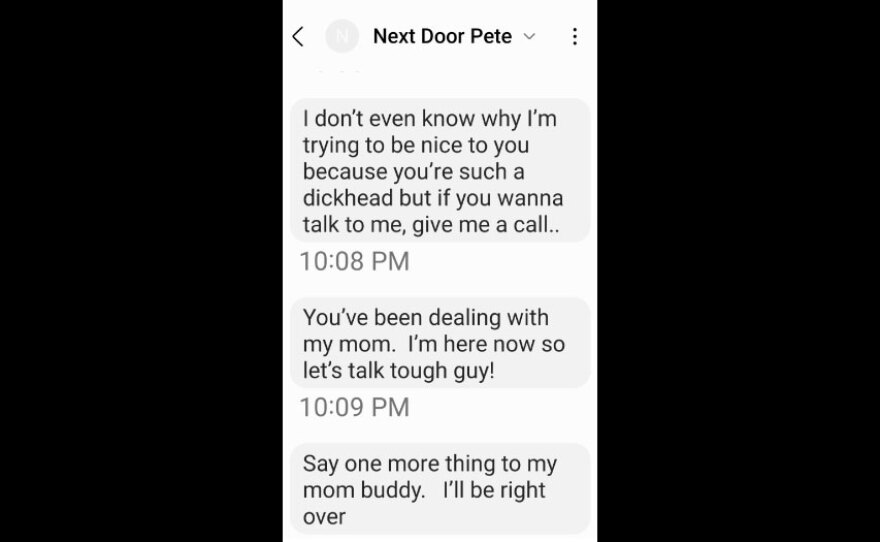
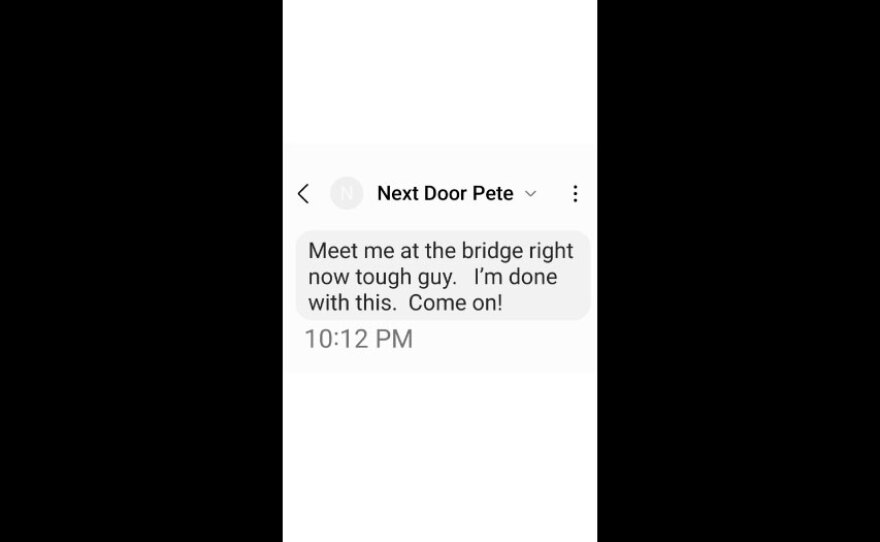
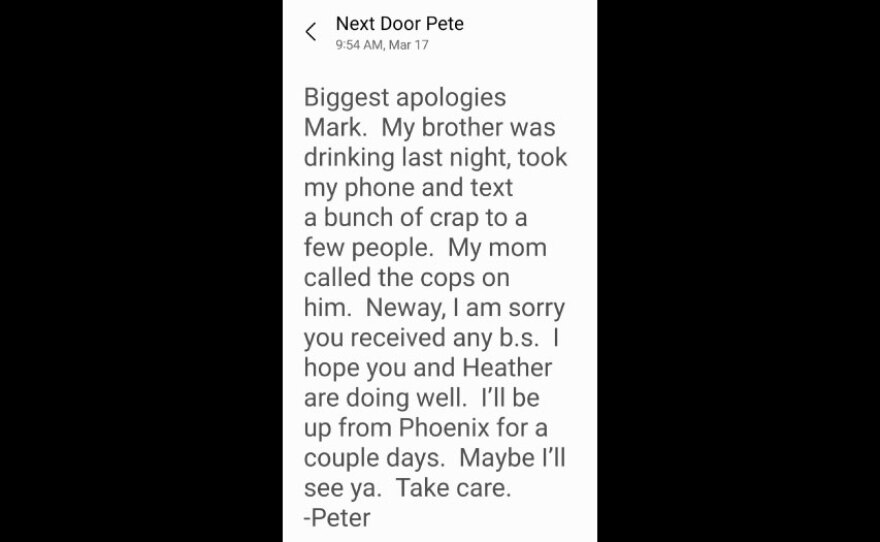
Shaffer said he contacted the Lane County Sheriff’s Department about the texts, but nothing was done about it.
“That's two times that the sheriff's department has backed these people up,” he said.
Shaffer says he’s not a NIMBY. He’s done plenty of work on his property, adding a detached garage and an accessory dwelling unit of his own.
He had issues with getting his ADU permitted. It now sits on a foundation about as tall as he is.
“You see how high that is? That's the code,” he said. “And I'm not even in the flood zone, I'm in the floodway. And you take a look and you'll see their ADUs are flat on the ground.”
Standing under an electrical line that required updates to accommodate some of his remodeling, Shaffer has one request of Jones-McCann.
“Obey the rules,” he said. “We redid the electrical. You can see the permits. There's no permits on that work over there.”
County Planner Noray-Ann Spradling said regulations are in place for a reason: to help ensure properties are safe, durable and comply with state law.
“We still have houses that are 100 years old in our county that people are still living in, and that’s awesome,” she said. “It would be nice if 100 years from now, these other structures are still standing today. I’d love that.”
She said that’s what permitting helps do: ensure houses are built in a way that keeps them standing and doesn’t harm what the public values.


