


Thousands in the Warm Springs reservation have been without power or clean water for nearly a week. As the government reopens they’re faced with rebuilding — even while the fire still burns.
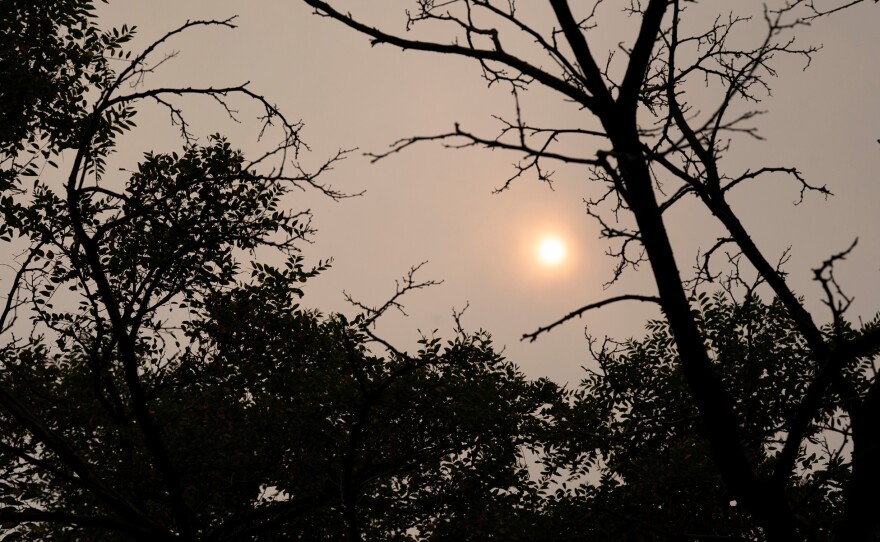
Warm Springs tribal member Shana Johnson sat in her purple Scion in front of her barn and watched a firefighting crew leave for the night as thick wildfire smoke turned the setting sun a brilliant orange.
The Bench Fire that erupted more than a week ago upended life for Johnson and the three generations of her family living on a sprawling ranch on the outskirts of the 640,000-acre reservation. The winds shifted, forcing them to flee briefly to a nearby open field for safety. They lost electricity for seven days, lost power to their wells and rationed granola bars as their food spoiled.
“We were so frightened that we didn’t want to leave our animals, our cows and our horses and our dogs and cats,” Johnson said. “I mean, it’s not like for us, we can just pick up and move. So we pretty much decided that we were going to all stay and make sure that our animals were OK.”
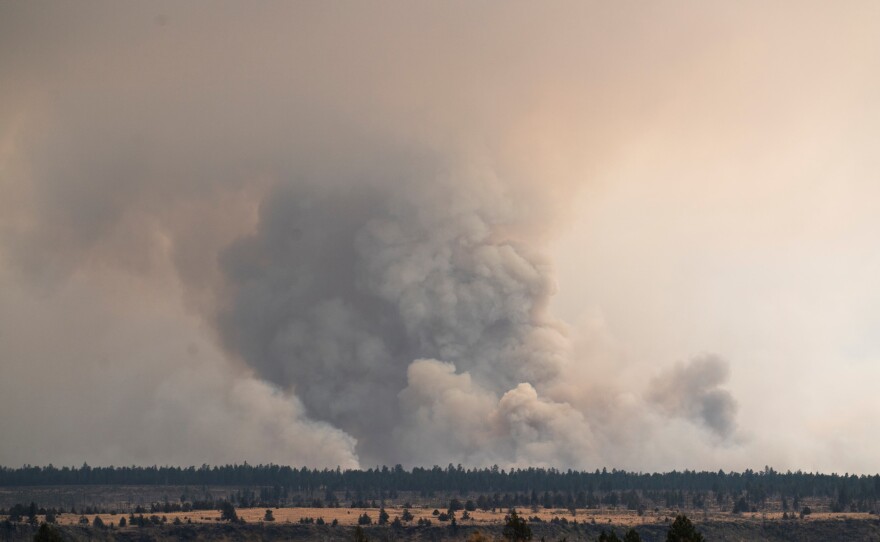
The Bench Fire tore through the Warms Springs Reservation, burning at least six homes and forcing hundreds to evacuate as roads closed and the air filled with thick smoke. As of Sunday afternoon, the fire is now about two-thirds contained, but it will likely take years for the tribe to recover from the disaster.

The fire is one of at least 30 fires that have burned nearly 1.8 million acres statewide as Oregon endures one of the worst wildfire seasons in years. Another fast-moving fire broke out late Saturday near Madras amid hot and windy conditions.
For the Warm Springs tribe, the blow from the Bench Fire has been both financial and emotional, from the loss of ancestral foods to revenue from timber sales, said Edward Henderson, Treasury-Secretary and CEO of the Confederated Tribes of Warm Springs.
“It’s the land, the fish, the animals, all of it,” he told OPB. “We see it as interconnected. Someone outside might say, ‘It’s just a forest, it’ll grow back.’ We live here and were supposed to take care of it,” he added, his voice catching with emotion.
Evacuation orders were downgraded this week and the tribal government offices reopened Thursday. But residents are still dealing with boil water notices and water shortages, sporadic electricity and closed roads, and many are still scattered.
Thousands more on the reservation who couldn’t get out have been under shelter-in-place orders for more than a week.
Fleeing the flames
On a day earlier this week, Flint Scott paced along a small balcony overlooking a parking lot in his hotel room in Madras. He was on the phone, trying to get a prescription filled at a nearby pharmacy.
The last few nights in the hotel room with a couple of queen beds and a small bathroom had offered some relief after days spent sleeping outside.

Scott, who is Wasco, Warm Springs and Paiute, fled his Warm Springs home with his daughter Cajun Scott, as flames from the Bench Fire raged forward.
As the flames approached Scott’s house, he rushed six miles down the road to Cajun’s home. Police were there too, yelling for people to evacuate.
“It got to the point like, ‘OK, we need to prioritize this, kid. What’s important?’” Scott said.
His daughter grabbed her beads and buckskin, along with food. She and her partner live paycheck to paycheck. After paying bills and buying groceries the couple was down to their last $50.
Driving out of the neighborhood, Scott said he worried that they wouldn’t make it.
“You couldn’t even see,” he said. “You couldn’t even breathe. And there was white and black smoke everywhere. You couldn’t even see 10 feet in front of you.”

That night the three slept outside of a friend’s house farther north because it was full of other people who’d evacuated.
When they heard a shelter on the reservation was open for evacuees they went there but said they found the doors locked. They were forced to sleep outside again, in the smoke.
“I was just thinking about the houses up there,” Cajun Scott said, remembering the nights spent outside on cots. “I was thinking if my family’s home burns down that I’m staying in, where am I going to go?”
Her family house was spared, but her dad Flint Scott’s place and the family home next to his — where he grew up — both burned to the ground.
"I have a lot of fond memories there,” he said, “and it’s gone.”
The family is unsure of what assistance they’ll get from the tribes or other governments — and they don’t know when they can return to the home that survived.

As the fire raged last weekend it threatened the tribal agency district where the government operates. For five days, the Confederated Tribes of Warm Springs’ offices were closed and tribal resources and communication suffered.
Henderson, the tribal official, said that he’s heard tribal members’ frustrations over the last week. Even after tribal offices reopened on July 30, there’s been confusion and anger with basic services that are affected.
“We haven’t been as fast forthcoming on some of the services that they need,” he said. “We understand that.”
The tribe issued a boil water notice earlier this week. And on Wednesday, residents on the agency water system south of Shitike Creek were told to limit water use until further notice because water tanks had dropped to critical levels because of firefighting efforts.
Following the fire, OPB repeatedly requested access to the reservation to interview people at a shelter and permission to visit homes on the reservation, which is governed by a sovereign nation. These requests were denied by the tribal council.
They say the ban is to respect tribal members during the crisis. But residents OPB interviewed elsewhere and by phone say they are concerned about the public not realizing what is unfolding with a lack of resources, extended power outages and boil water notices. On Thursday, tribal officials warned residents they could run out of water altogether because of a cracked pipe.
‘It’s a part of us, this land’
Some of those who stayed behind found themselves on the frontlines of the fire, racing to save their homes and their animals as flames encroached.
Johnson, who lost power to her ranch for a week, told OPB the family has worked nonstop for days putting out spot fires, running water to perimeter areas and cutting down trees to further insulate themselves.
The fire and smoke is relentless in their valley.
One night early on in the fire’s life, the wind shifted and came their way.

Johnson said she asked a fire official what to do and was told that if they wouldn’t leave the safest place for them would be in the middle of a pasture.
“And boy, she called it right on,” Johnson said, adding that the official stayed with them in the pastures until the flames subsided. But she hasn’t seen firefighters drop any water or paint the land red with flame retardant nearby.
“In the mornings when you wake up, you can’t even see in front of you because it’s so smokey,” Johnson said. “Sometimes when it’s so thick, you feel kind of nauseated.”
One of her nephews went to the hospital when he had trouble breathing because of the smoke. But when he was released he couldn’t get back home right away. The roads had closed again. That’s, in part, why Johnson says nobody else has left.
The generational land, the cattle, the horses, all of it is a part of Johnson. Twelve people, ranging in age from 3 to 75, live on the ranch, she said.

As we talked she said she could still see trees burning in the distance and she’s worried about the dry Juniper trees on the butte nearby.
She estimates she has about two weeks left of hay to feed the hundreds of cattle still returning from nearby pastures and she’s not sure how she’ll get more.
And there are weeks of fire season to get through.
“My family takes care of the fences for our grazing district. We take care of the springs. We take care of the creek. We take care of the animals,” she said.
“We’re raised here since all our life. It’s a part of us, this land, and we’re a part of it.”
This story comes to you from the Northwest News Network, a collaboration between public media organizations in Oregon and Washington.


